
Last updated October 30, 2026
 House lockouts
 Re-keying
 Deadbolt upgrades
 Smart locks
 Schlage
 Kwikset
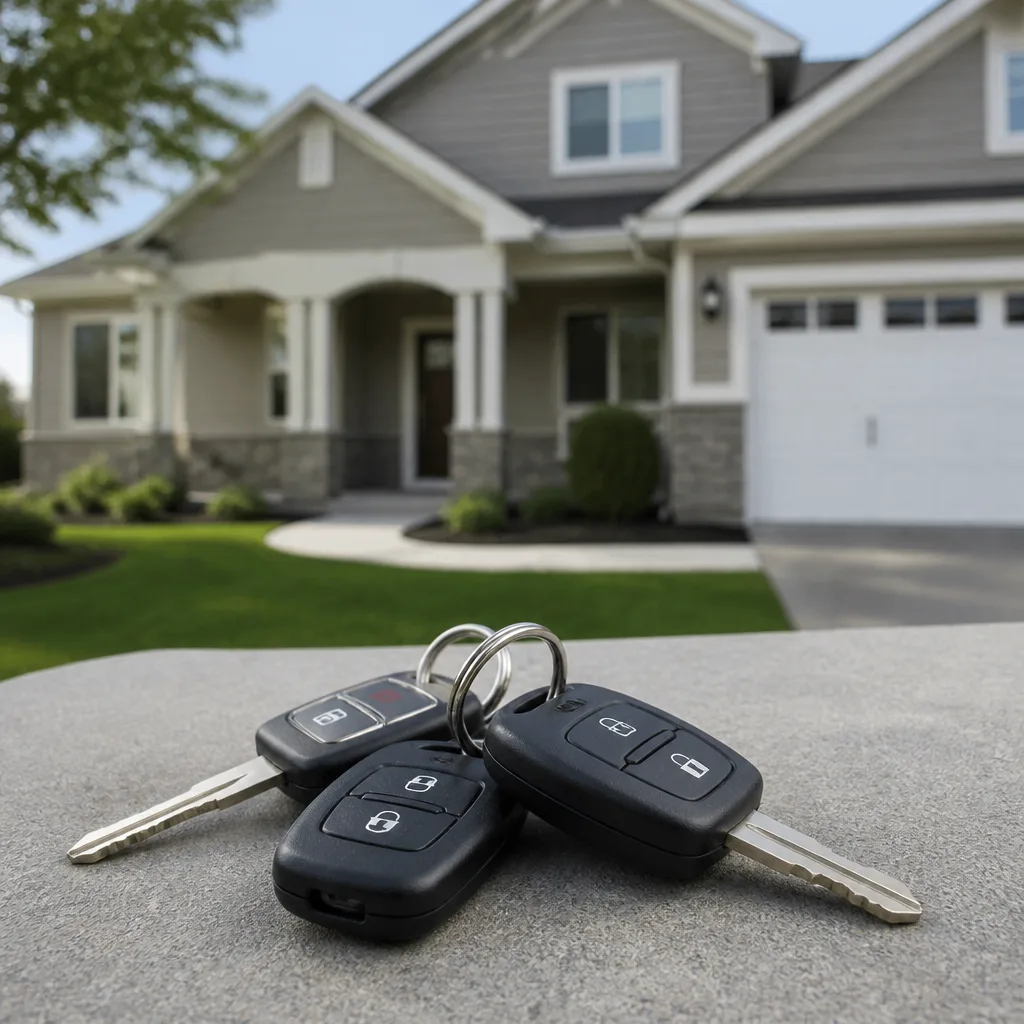 Car keys & fobs
Non-destructive entry first, always - and we re-key Schlage, Kwikset, and Baldwin locks on the spot while you watch
You get a price before we start. It does not change when we arrive. No surprises.
Get your free estimateCar Key Replacement Maintenance Checklist for Riverside Homeowners
Here’s a number that surprises most Riverside drivers: a transponder car key dies, on average, every four to five years. Not from abuse. Not from being dropped. From the slow, silent decay of a coin-cell battery and the accumulated ware on a blade you never think about until it stops turning. A dead transponder key in a Riverside parking lot on a 108°F August afternoon isn’t a locksmith problem. It’s a planning failure that a $12 battery and one annual check could have prevented. This guide walks through the maintenance routine that keeps your car keys healthy, what Riverside’s climate does to them, what a Car Key Replacement actually costs, and when it’s smarter to call a mobile locksmith than have your car towed to a dealer.
Styles & brands we work with
Quick Answer
Car key replacement in Riverside doesn’t have to be a roadside emergency. A 10-minute annual inspection of your key fob battery, transponder signal, and physical blade catches 90% of failures before they strand you. When a replacement is unavoidable, a mobile locksmith can typically cut and program a new key at your location for $120 to $280, which is usually faster and less expensive than a tow to the dealership.
Table of Contents
- Why Riverside Heat Kills Car Keys Faster Than the Manual Says
- The 10-Minute Annual Key Health Checklist
- The Three Types of Replacement Keys (And What They Actually Cost)
- When to Cut a Spare vs. When Replacement Is Unavoidable
- Mobile Locksmith vs. Dealer: The Riverside Decision Matrix
- Battery Replacement: What to Do Before It Dies
- Common Mistakes to Avoid
- When to Call a Professional
- Frequently Asked Questions
- The Bottom Line
Why Riverside Heat Kills Car Keys Faster Than the Manual Says
Riverside drivers log some of the highest vehicle-miles in the Inland Empire. That’s not a marketing statistic. It’s a lived reality of a region where a trip to work in Ontario, a weekend run to Moreno Valley, and a Costco stop in Corona all happen in a single day. Your car key rides along for every one of those miles, baking on the dashboard, sliding around the cupholder, and getting pressed, dropped, and sat on. The manufacturer’s four-to-five-year battery estimate assumes a mild climate. Riverside is not a mild climate.
Here’s what the heat actually does. The coin-cell battery inside your key fob has an electrolyte that degrades faster at sustained temperatures above 95°F. Leave your key on a Riverside dashboard in July, and the interior of that fob can reach 130°F or more. The battery drains two to three times faster than it would in a coastal climate like San Diego or Ventura. We’ve seen fobs in Riverside need a battery replacement every 18 months, even on cars less than three years old.
The rubber seals degrade too. Transponder keys aren’t sealed units. They have micro-switches, a circuit board, and a rubber membrane that sits under the buttons. Riverside’s dry heat and intense UV exposure cause that rubber to become brittle and crack. Once it cracks, dust and moisture get inside, and the micro-switches start to fail. A key that works intermittently, a lock button that needs two or three presses, a trunk release that’s suddenly lazy: these are all signs of seal failure before the battery even dies. Check your key once a year, and you catch these warning signs while the fix is still a $12 battery, not a $200 emergency Car Key Replacement Troubleshooting: Common Problems and How to Fix Them situation.
The 10-Minute Annual Key Health Checklist
Set a calendar reminder. Pick a date you’ll remember: the first weekend of October, the day you change your clocks, or the day you get your car’s oil changed. Run through these seven checks. The whole routine takes ten minutes, and it catches failure before failure catches you.
- Test every button, twice. Lock, unlock, trunk, panic. Press each one two times in a row. Hesitation, double-press requirements, or no response at 20 feet means the battery is weakening. It doesn’t mean the key is dead. Replace the battery now.
- Check the physical blade. Pull the emergency key out of the fob if your car has one. Look at the brass or nickel blade under a bright light. Worn teeth, rounded edges, or visible flattening means the blade is wearing faster than the ignition cylinder. A worn blade can damage the ignition, and a locked-up ignition is not a roadside fix.
- Test the transponder signal. Sit in the car with the key in your pocket. Try starting the engine without taking the key out. If the car stumbles, shows a “key not detected” light, or takes an extra beat to start, the transponder chip is losing power or range. This is the single most common failure on push-to-start vehicles over five years old.
- Inspect the rubber button pad. Look at the rubber around the buttons. Cracks, peeling, or a powdery white residue means UV degradation. That’s the beginning of the end. The fob will need a new housing, which costs $30 to $60, far less than a full replacement.
- Clean the contacts. Open the fob and inspect the battery. If the terminals show white or green corrosion, a gentle scrape with a pencil eraser and a dry cloth will restore a solid connection. If the corrosion is heavy, the circuit board may have damage. Get it looked at.
- Check your spare. Most people keep their spare key in a drawer, never thinking about its battery. A spare that hasn’t been tested in three years is not a spare. It’s a liability. Pull it out, test every button, and verify that it still starts the car.
- Write down your key’s chip type. If you don’t know whether you have a transponder key, a keyless entry fob, or a smart key with push-to-start, find out now. It changes the cost of a replacement by $100 or more. A locksmith can identify it in under a minute. Knowing what you have before you need a replacement means no sticker shock at the worst possible moment.
Run this checklist once a year and you functionally eliminate the possibility of a surprise key failure. The failures that strand Riverside drivers are predictable. The trick is to look before it’s a crisis.
The Three Types of Replacement Keys (And What They Actually Cost)
Not all replacement keys are created equal. Riverside drivers get quoted wildly different prices depending on who they call and what they ask for, so it’s worth knowing what each type involves before you’re standing in a parking lot with a dead fob and a tow truck on the way.
1. A Dealer-Programmed Key
A dealership orders an OEM key by VIN, cuts it to the factory cut code, and programs it with the dealer-only diagnostic tool. This is the gold standard for warranty preservation and the most expensive route. Depending on the make and model, expect $250 to $450 for the key, plus $50 to $150 for programming. Some dealers charge a diagnostic fee just to pull the code. You’re also paying for the tow, since the car has to be at the dealer for programming. On a six-year-old Honda, this might be $500 by the time you’re driving again. On a new Audi or BMW with a coded smart key, the dealer may genuinely be the right choice. But on many vehicles, a dealer visit is a $300 tax on convenience.
2. An Aftermarket Key
An aftermarket key is manufactured by a third party, programmed by either a locksmith or an independent shop, and typically costs $60 to $140 for the key plus $60 to $120 for programming. The catch is quality. Aftermarket shells and blades are often softer brass, not nickel silver, and the transponder chips are universal clones rather than factory-coded. Some work flawlessly for years. Others develop intermittent signal problems within a few months. If an aftermarket key is all you can afford, it’s workable, but you should know that you’re trading longevity for price. We tell Riverside customers the truth: an aftermarket key is a bridge, not a permanent solution.
3. A Locksmith-Programmed Key
A qualified automotive locksmith cuts a new key blank to your car’s specific cut code and programs the transponder with a professional diagnostic tool. In the Riverside market, a standard transponder key replacement runs $120 to $220. A smart key with push-to-start runs $180 to $280. A keyless entry fob without an ignition chip runs $80 to $150. These prices include the key, the cutting, the programming, and the mobile service call. The key itself is usually an OEM or OEM-equivalent blank, not a cheap clone, and the programming is identical to what the dealer does. The car doesn’t care who holds the tool, only that the tool speaks the right language.
The advantage of a locksmith-programmed key is twofold. First, you’re not paying a tow bill. A mobile locksmith comes to you, whether that’s the Target parking lot on Tyler Street, your driveway in the Wood Streets, or the office park off the 91. Second, the pricing is transparent before anyone arrives. At Greystone Locksmith, our car key replacement in Riverside is quoted fully on the phone, including programming, before we dispatch a technician. The price we quote is the price on the invoice.
When to Cut a Spare vs. When Replacement Is Unavoidable
The cheapest car key replacement is the one you buy before you need it. Riverside drivers who wait until their last working key fails pay a premium: emergency pricing, rush programming, and often a tow. A spare key ordered at your leisure costs the same for the hardware but removes the urgency. Here’s the calculation.
Cutting a spare when you still have one working key: $60 to $140 for a standard transponder key, $120 to $200 for a smart key. You drive to the locksmith or they come to you, the key is cut and programmed in 20 to 30 minutes, and you now have two working keys. Most cars allow you to program a third key yourself if you have two working keys, which means your next spare could cost as little as $40 for a cut-and-program at home.
Replacing a key when you have zero working keys: $150 to $280 for a standard transponder, $200 to $350 for a smart key. The locksmith has to pull the ignition cylinder or read the VIN to get the cut code, and programming from scratch takes longer. You’re paying for the lost-key premium and possibly a tow if the car is stranded.
Replacing a key when you still have one but it’s failing: This is the sweet spot. You can schedule a replacement at normal rates, keep the failing key as a backup, and never experience a no-start situation. The failure is already visible in the form of weak buttons, a weak transponder signal, or a worn blade. Act on the warning signs, and a $120 key becomes a $0 emergency.
Here’s the scenario we see most often in Riverside: a driver with one key notices the lock button takes two presses. They ignore it. The button stops working entirely. They still ignore it. The transponder dies. Now they’re calling an emergency locksmith in Riverside from a parking structure at 6 PM, paying for an emergency reprogram instead of a scheduled spare. The cost difference is $100 to $200. The inconvenience difference is incalculable.
Mobile Locksmith vs. Dealer: The Riverside Decision Matrix
This is the question Riverside drivers ask more than any other: should I call a locksmith or have the car towed to the dealer? The honest answer is that it depends on the vehicle, the key type, and the situation. Here’s the decision matrix that we’ve used with hundreds of customers.
A mobile locksmith is the right call when:
- Your car uses a standard transponder key, a keyless entry fob, or a smart key that’s supported by aftermarket programming tools. This covers nearly every domestic, Japanese, and Korean vehicle from 2000 forward, plus most European models up to around 2016.
- You’re stranded somewhere that a tow is a hassle: a parking structure, a residential side street in Canyon Crest, or anywhere along the 91 at rush hour.
- You have one working key and want a spare cut at your home or office.
- You need the job done in under an hour, not after a tow, a service-writer intake, and a two-hour dealer queue.
- You’re price-sensitive and want a firm quote before committing.
The dealer is genuinely the right call when:
- Your vehicle is a late-model European or luxury model with encrypted keys that require dealer-only programming. Some 2018+ BMWs, Audis, Mercedes, and Land Rovers fall into this category. A qualified locksmith will tell you before taking your money.
- The car is still under full factory warranty and the dealer has confirmed the key replacement is covered.
- You have a very rare or vintage vehicle where the key blank isn’t available through aftermarket suppliers.
- The vehicle’s ECU has been flashed or replaced, and the key programming requires dealer-level software that independent tools can’t access.
Here’s the rule we use: if a locksmith can program it, the locksmith is faster and cheaper. If the locksmith says dealer, believe them. A reputable shop won’t take a job it can’t complete. The right call is the one that gets you back in your car with a key that works, not the one that sounds good on the phone. When you call Greystone Locksmith, we’ll tell you in two minutes whether we can handle your car in the field or whether the dealer is the honest answer. We’d rather send you somewhere else than waste your time.
Battery Replacement: What to Do Before It Dies
The single most preventable cause of car key failure is the battery. A coin-cell battery costs $3 to $12 at any Riverside auto parts store or pharmacy. Replacing it takes five minutes. Yet we see keys every week that died solely because the battery was three years old and nobody thought to check it.
Here’s the maintenance interval we recommend for Riverside drivers. If your car is newer and uses a proximity smart key, replace the battery every 18 to 24 months. Riverside’s interior temperatures push these batteries to the edge of their rated range, and a smart key is constantly broadcasting a low-power signal to the car. It never sleeps. On a standard transponder key where the fob is only used for lock and unlock, the battery can last three to four years, but test it annually.
The warning signs are consistent. The lock or unlock buttons start working intermittently. The car’s “key not detected” light comes on even when the key is in your pocket. The remote range shrinks from 50 feet to 10 feet. Or the panic button works but the lock button doesn’t, which usually means the micro-switch is failing, not the battery.
Replacing the battery yourself is straightforward on most keys: pry the two halves apart, note the battery number (usually CR2032 or CR2025), swap in a new one, and press the halves back together. The one caution: static electricity can damage the circuit board. Touch a grounded metal surface before opening the fob. And if you crack the plastic case while prying, you’ll need a new shell, which costs $20 to $50 and takes a few days to order.
If you’re uncomfortable opening the key, or the fob is sealed with adhesive rather than clips, call a locksmith. We replace batteries on nearly any key while you wait, and it’s usually under $20 including the battery. The point is to do it before the key dies completely. Once the battery is dead, there’s no advance warning, and you’re standing in a Riverside parking lot with a key that does nothing.
Common Mistakes to Avoid
- Waiting until the last key fails to buy a spare. This is the most expensive mistake in the book. A spare cut while you still have a working key costs $60 to $140. The same key after a loss or failure costs $150 to $280 and may include a tow. The math is not hard.
- Buying the cheapest key blank online and expecting it to last. The $25 key fob shells sold on discount marketplaces are made from soft brass and universal clone chips. They work for a few months, then the buttons fail or the signal drops. You end up buying the real key anyway. Buy the right part once.
- Keeping the spare in the car. A spare key under the floormat defeats the purpose of having a spare. If the car is stolen, the thief now has both keys. Keep the spare at home, and make sure someone in the household knows where it is.
- Ignoring the “key not detected” warning light. This is not a harmless glitch. It’s the car telling you the transponder signal is weakening. On most vehicles, this warning appears weeks or months before the key fails entirely. It’s the cheapest fix you’ll ever catch.
- Using the physical key to open a door when the battery is fine. On many cars, the emergency blade is a backup, not the primary access method. If you’re using it regularly because the fob buttons are unreliable, you’re not fixing the actual problem. You’re wearing out the lock cylinder and ignoring the fob failure.
- Having a dealer program a key on a vehicle out of warranty. If your car is past its factory warranty, there’s rarely a reason to pay dealer labor rates for key programming. An independent locksmith uses the same programming tools and charges less. The only exception is late-model European vehicles with encrypted keys.
- Not asking for the total price on the phone. Some shops advertise a low key price and then add cutting, programming, and service fees when they arrive. At Greystone Locksmith, our Riverside car key replacement quotes the full price before dispatch, and that’s the price you pay. If a shop won’t give you a firm quote on the phone, call someone who will.
When to Call a Professional
Some key problems are DIY-solvable. A dead battery is a five-minute fix. A cracked case is a parts order. But there are situations where a professional is the only rational choice. If your key has a transponder chip that needs programming, that requires a diagnostic tool that’s specific to your vehicle’s make and model. If your key is bent or the blade is sheared, forcing it in the ignition can destroy the ignition cylinder, which is a $400 to $800 repair. If your car is a push-to-start model and you have no working keys, the vehicle may need a full key registration process that only a professional tool can complete. If you’ve tried an aftermarket key and it failed, stop throwing money at clones and get a properly cut and programmed key. Greystone Locksmith offers free estimates in Riverside. Call (866) 497-9415 and we’ll tell you honestly what your car needs, what it will cost, and whether we’re the right shop for the job.
Frequently Asked Questions
A standard transponder key replacement in Riverside runs $120 to $220, including the key, cutting, programming, and mobile service. Smart keys with push-to-start run $180 to $280, and keyless entry fobs without an ignition chip run $80 to $150. Dealer replacements run $250 to $450 for the key plus $50 to $150 for programming, and they often require a tow to the dealership. Call (866) 497-9415 for an exact quote on your vehicle. Estimates are free.
With Greystone Locksmith, yes. We quote the full price for your car key replacement in Riverside before we dispatch a technician, and that’s the number on your invoice. There’s no call-out surcharge added when the technician arrives and no hidden programming fee. We don’t advertise a low teaser price and then inflate the bill. The price you hear on the phone is the price you pay.
Yes, in most cases. A locksmith can read the VIN, pull the factory cut code, cut a new key, and program the transponder at your location. This works on nearly all domestic, Japanese, and Korean vehicles, plus most European models up to around 2016. Some late-model European vehicles require dealer programming. A reputable locksmith will tell you before taking the job.
Most car key replacements in Riverside are completed in 30 to 60 minutes from the time the locksmith arrives. That includes cutting the new blade, programming the transponder, and testing all functions. The limiting factor is often traffic, not the work itself. If you’re stranded in a parking lot, we come to you and have you driving again before a tow truck would even reach the dealership.
Yes, more than most people realize. Riverside’s summer temperatures routinely exceed 100°F, and the interior of a parked car can reach 130°F or higher. That heat accelerates the chemical degradation of coin-cell batteries and causes the rubber seals on key fob buttons to become brittle and crack. Expect battery life 30 to 50% shorter than the manufacturer’s published estimate. Annual testing catches the decline before failure.
If you have one working key, get a spare cut and programmed now. The cost is $60 to $140 for a standard transponder key, and you’ll avoid the lost-key premium that applies when you have zero working keys. Having two working keys also means you can usually program a third key yourself at home, dropping your future replacement cost significantly. If your only key is already failing, replace it immediately and keep the old key as an emergency backup.
The Bottom Line
Car key replacement in Riverside is a maintenance issue that drivers treat as an emergency. The fix is a $12 battery, a 10-minute annual inspection, and the willingness to buy a spare key before you need it. Heat is the silent enemy here: Riverside’s climate kills key fob batteries faster than manufacturer timelines predict, embrittles the rubber seals, and turns small failures into stranding events. Understand what you have, check it once a year, and you functionally eliminate the surprise. For more guides & resources on keeping your keys working, visit our blog. When replacement is unavoidable, know that a mobile locksmith is usually faster and cheaper than a dealer, and that the price you’re quoted up front should be the price you pay. If you’re carrying one key and hoping for the best, that hope is costing you money. Buy the spare now.
Written by the team at Greystone Locksmith, serving Riverside since 2011.