Last updated October 30, 2026
 Smart locks
 House lockouts
 Re-keying
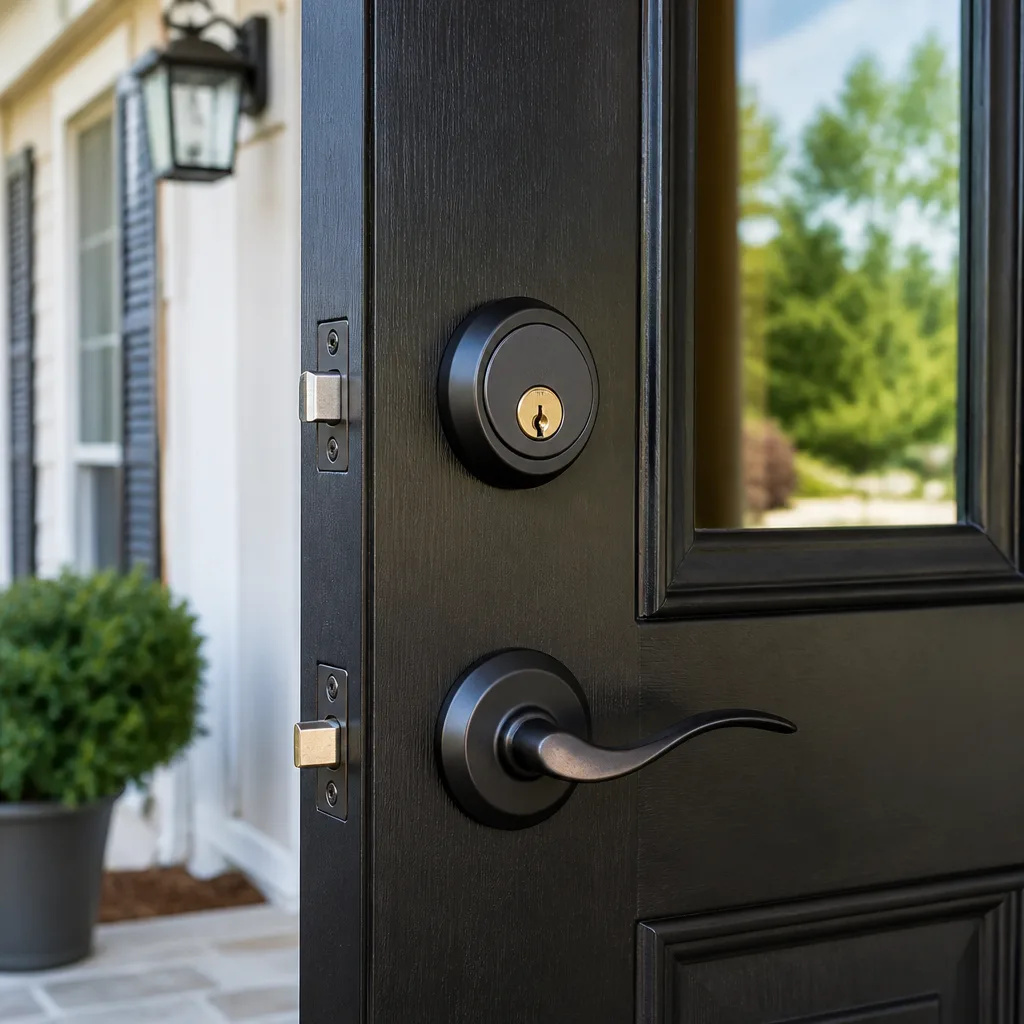 Deadbolt upgrades
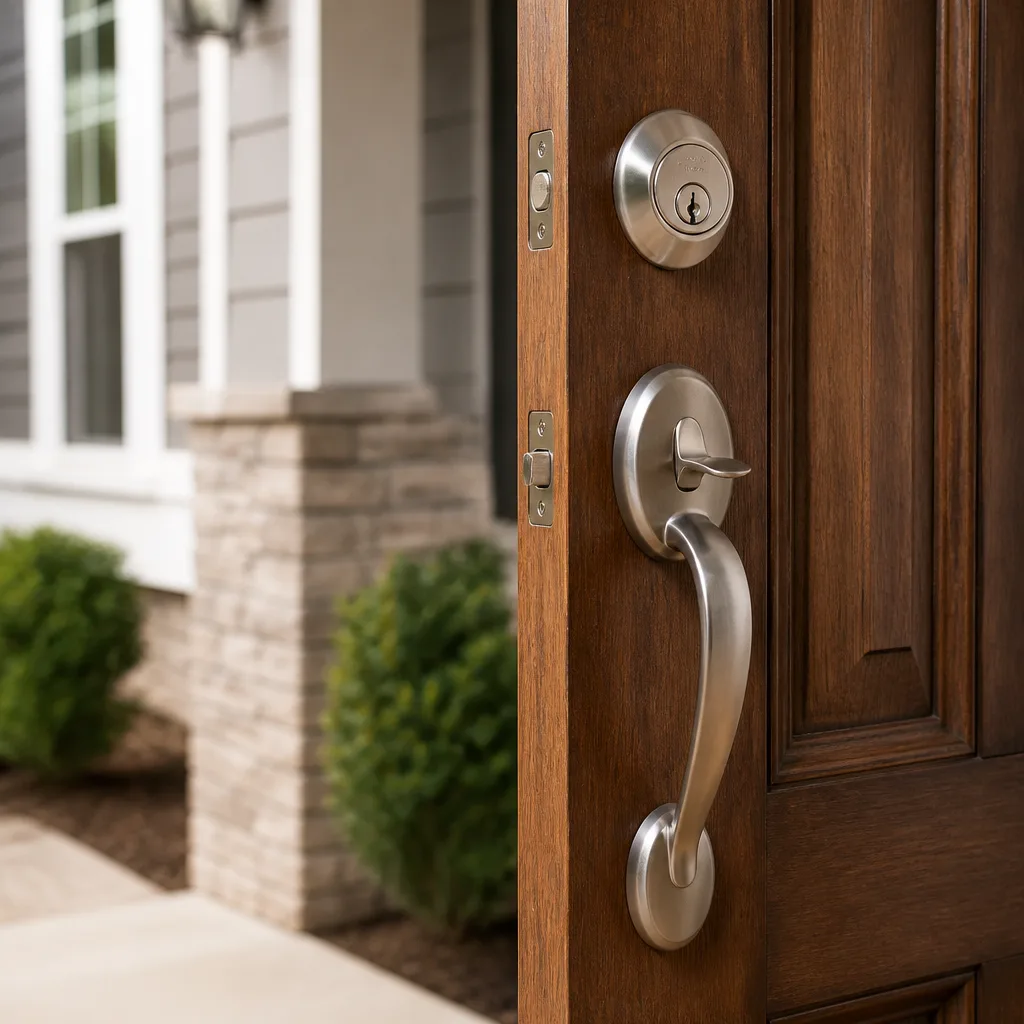 Schlage
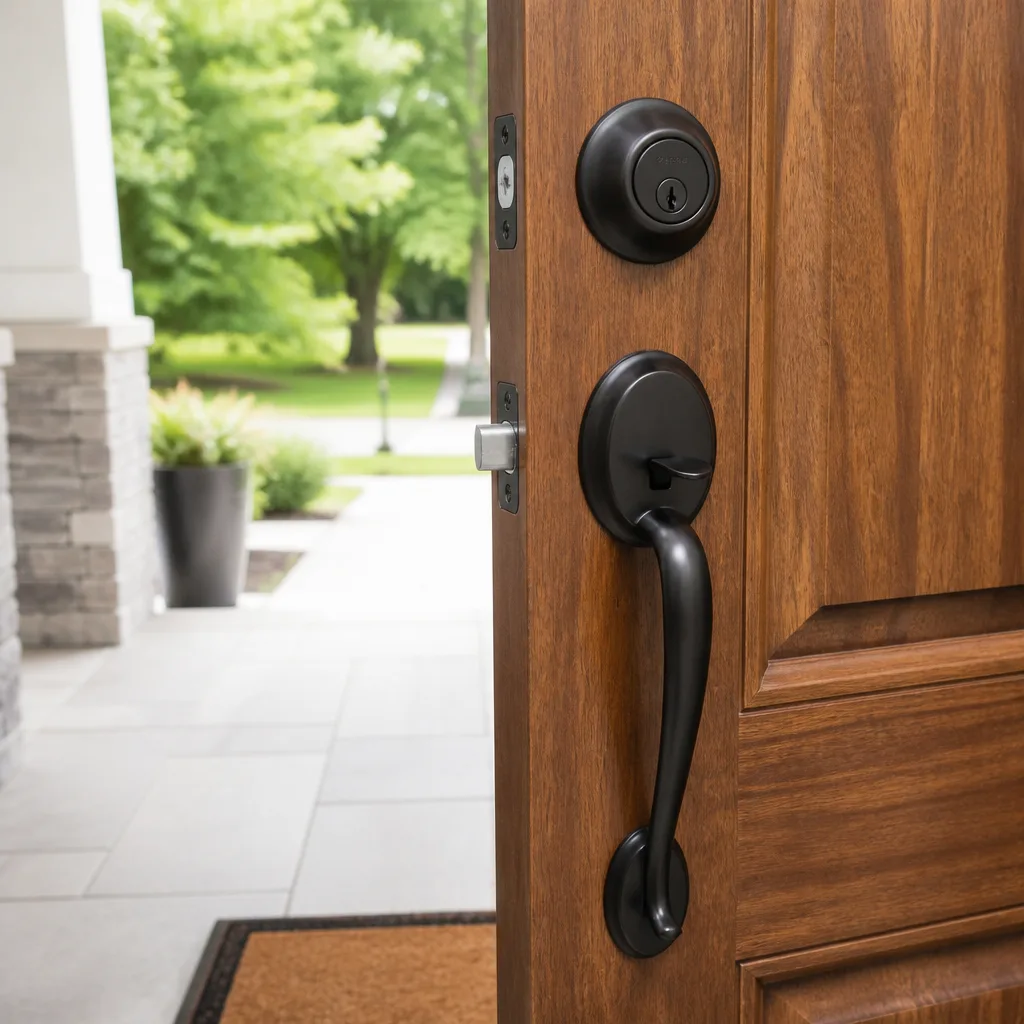 Kwikset
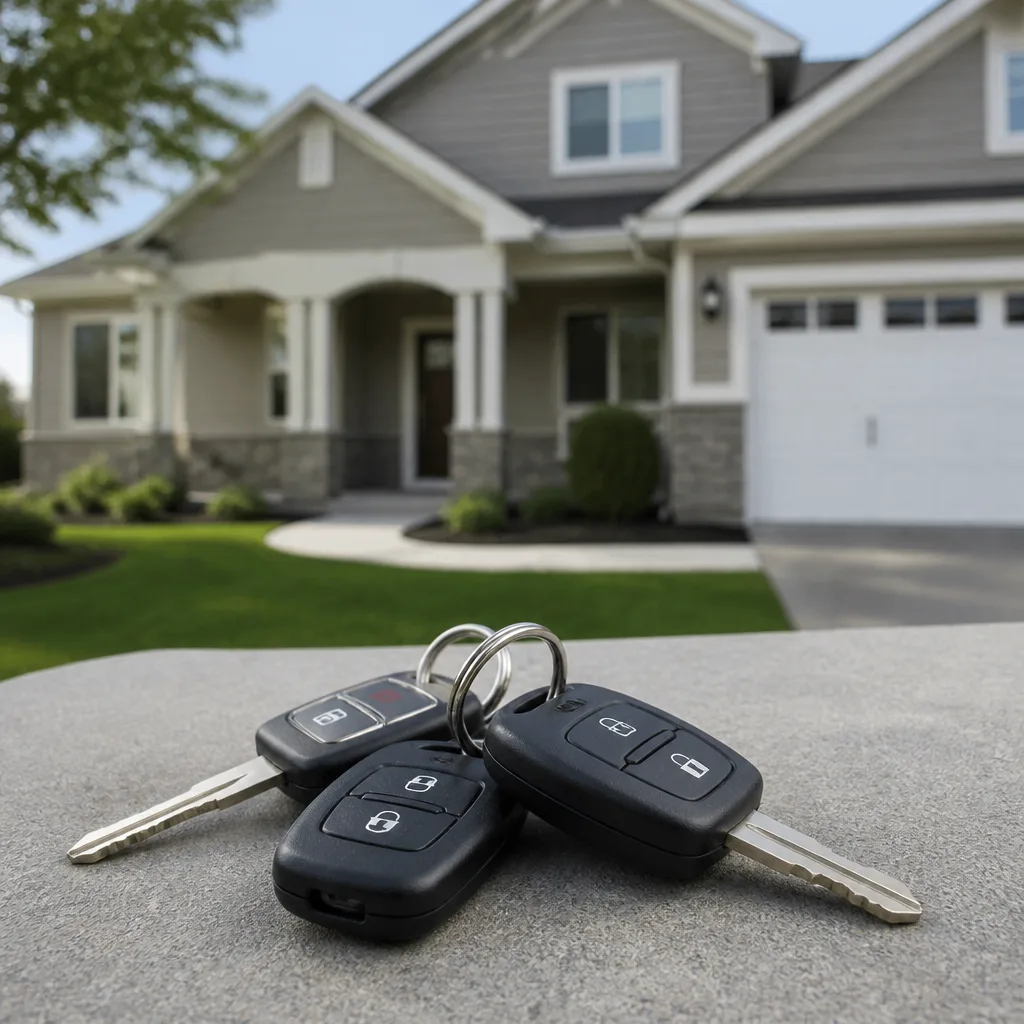 Car keys & fobs
Non-destructive entry first, always - and we re-key Schlage, Kwikset, and Baldwin locks on the spot while you watch
You get a price before we start. It does not change when we arrive. No surprises.
Get your free estimateDIY vs Professional Locksmith: The Riverside Homeowner’s Decision Guide
Changing a Kwikset knob yourself costs about $35 and carries almost no risk. Attempting to rekey a Schlage B-series deadbolt with a YouTube tutorial and a $15 kit has a high probability of leaving you with a permanently damaged cylinder and a door you can’t lock. The real question for Riverside homeowners isn’t whether a locksmith is cheaper than doing it yourself. It’s whether the failure mode of the job you’re considering is something you can undo with a trip to the hardware store, or something that leaves your house unsecured overnight. This guide walks through the jobs that make sense as DIY, the jobs that don’t, and the Riverside-specific factors that tilt the decision one way or the other. For related reading, see our Locksmith Emergency Preparedness Guide for Riverside Homes.
Styles & brands we work with
Quick Answer
For low-consequence jobs like swapping a door knob, lubricating a keyway, or replacing a battery, DIY is fine for most Riverside homeowners. For anything involving cylinder disassembly, high-security hardware, transponder programming, or a rental property you don’t own, hire a professional. A failed DIY rekey on a Medeco or Mul-T-Lock cylinder costs more to fix than calling a locksmith in the first place.
Table of Contents
- The Consequence Matrix: Why Cost Is the Wrong First Question
- Low-Consequence DIY Jobs: What You Can Safely Do Yourself
- High-Consequence Professional Jobs: Where DIY Goes Wrong
- The Hidden Cost of DIY Failure: A Medeco Cylinder Is Not a Kwikset
- Rental Properties in Riverside: Why DIY Rekeying Is a Liability
- Tools That Make DIY Legitimate vs. Tools That Make It Dangerous
- The One DIY Job Every Riverside Homeowner Should Do Annually
- Common Mistakes to Avoid
- When to Call a Professional
- Frequently Asked Questions
- The Bottom Line
The Consequence Matrix: Why Cost Is the Wrong First Question
Most DIY-versus-professional debates start and end with price. But price only tells you what you pay up front. The question that actually matters is what happens when the job goes sideways. Some lock work fails gracefully: you notice the knob is loose, you tighten it, you move on. Other lock work fails catastrophically: the cylinder seizes, the key won’t turn, and you’re standing outside your own house at 9 p.m. with a door that won’t lock and no way to secure the property before morning.
In Riverside, that scenario has a particular edge to it. The Inland Empire heat cycle, with summer temperatures routinely pushing past 100 degrees, causes metal lock components to expand and contract in ways that accelerate wear on already-compromised hardware. A lock that survived a DIY job in a cooler climate might seize entirely here after a single hot season. We’ve replaced cylinders in Riverside homes where the internal pins had effectively welded themselves into position after years of thermal stress. Add a partially successful DIY rekey to that equation and you’ve got a problem that no amount of graphite powder solves.
So the framework we recommend is simple. Before starting any lock project, ask: if this fails, what’s the worst outcome? If the worst outcome is that you spend another $20 and an hour of your time, DIY is reasonable. If the worst outcome is an unsecured door, a broken key stuck in a high-security cylinder, or a rental tenant locked out at midnight on your watch, the professional call is the cheaper call, even if the invoice looks higher on the front end.
Low-Consequence DIY Jobs: What You Can Safely Do Yourself
There’s a real category of lock maintenance that almost any Riverside homeowner can handle without specialized training. These jobs share three characteristics: no cylinder disassembly, no critical security function compromised, and easy reversal if something goes wrong.
Door knob and lever swaps. Replacing a standard Kwikset or Schlage passage knob or privacy knob is a straightforward two-screw job. The latch mechanism stays in place; you’re only swapping the trim. If the new knob doesn’t fit perfectly, you put the old one back on and you’re out nothing but time.
Smart lock battery replacement. Most smart locks, including the major Schlage and Kwikset lines, are designed for user-replaceable batteries. The lock tells you when power is low. You open the battery compartment, swap in fresh AAs, and you’re done. There’s no security risk and no way to damage the lock if you’re reasonably careful.
Strike plate screw tightening. Over time, the screws on your strike plate, that’s the metal plate on the door frame where the latch or deadbolt enters, loosen from repeated use. A loose strike plate makes your door feel loose and reduces the effective strength of your lock. Tightening those screws, or replacing them with longer 3-inch screws that bite into the door frame stud, is a legitimate DIY job with real security benefit. Riverside door frames, particularly in older homes in the Wood Streets and Magnolia Center neighborhoods, often have original 1950s-era framing that benefits significantly from longer screws.
Padlock maintenance and replacement. Exterior padlocks on gates and sheds take brutal punishment from Riverside’s summer sun and the occasional Santa Ana wind-driven dust. Lubricating and replacing padlocks is low-stakes work. If a padlock fails, you’re replacing a $15 item, not re-securing your front door.
The common thread: these jobs don’t touch the pin-and-tumbler mechanism that makes your lock function. They’re cosmetic, mechanical, or battery-level. The moment you’re tempted to open a cylinder, you’ve crossed into different territory.
High-Consequence Professional Jobs: Where DIY Goes Wrong
Certain lock jobs carry failure modes that are expensive, dangerous, or both. These are the jobs where a Riverside homeowner should think hard before reaching for a toolkit.
Deadbolt rekeying. This is the most common DIY disaster we see. The theory sounds simple: remove the cylinder, dump the pins, insert new pins per the key code, reassemble. The reality is that Schlage B-series and Kwikset deadbolts have tight tolerances, and the pins are small enough that one fumbled driver pin drops into the wrong chamber and the cylinder binds permanently. The $15 rekey kit doesn’t come with spare parts. It comes with just enough material to attempt the job once. Fail, and you’re buying a new deadbolt anyway, plus possibly a locksmith visit to undo your work.
ANSI Grade 1 deadbolt installation. Grade 1 hardware is commercial-grade. It’s what you find on banks and industrial facilities. Installing a Grade 1 Medeco or Sargent deadbolt requires precise drilling into the door edge and frame, and the strike plate must be mortised to specification. A misaligned installation doesn’t just fail to lock properly, it creates a false sense of security while leaving the door vulnerable to forced entry. Riverside homeowners who upgrade to Grade 1 hardware after a neighborhood break-in wave should treat the installation as a professional job, not a weekend project.
High-security lock servicing. High-security hardware like Medeco, Mul-T-Lock, and Abloy uses restricted keyways and patented key control systems. The components are intentionally not interchangeable with standard locksmith supplies. Attempting to service these locks with generic tools damages the cylinder, and because the cylinders are proprietary, replacements must be sourced through authorized channels. A destroyed Medeco cylinder isn’t a $30 hardware store purchase. It’s a $150-plus replacement that requires proof of key authorization. We work on these systems regularly, and we’ve seen DIY attempts turn a simple rekey into a two-week parts wait.
Transponder key programming. Modern car keys contain transponder chips that communicate with the vehicle’s immobilizer system. Programming a transponder key isn’t a mechanical task; it requires diagnostic equipment that reads the vehicle’s onboard computer. Without that equipment, the best-case scenario is a key that turns the ignition but won’t start the car. The worst case is a key that triggers the immobilizer into a lockout mode that requires a tow and a dealer visit. Car key replacement in Riverside for vehicles built after 2000 almost always requires professional programming equipment.
The Hidden Cost of DIY Failure: A Medeco Cylinder Is Not a Kwikset
The arithmetic of DIY locksmithing changes completely when the hardware you’re working on is high-security. Here’s the math nobody puts in the YouTube tutorial.
Scenario one: You attempt a rekey on a standard Kwikset deadbolt. The job goes wrong. You buy a new Kwikset deadbolt at the hardware store for $35, watch another video, install it correctly, and you’re done. Your total cost is $50 in parts and maybe three hours of frustration. Annoying, but survivable.
Scenario two: You attempt the same job on a Medeco deadbolt, because Medeco is what the previous owner installed and you want to change the key after buying the house. The cylinder is high-security. The pins are not standard sizes. The keyway is restricted. You damage the cylinder. There is no hardware store replacement. Medeco keys and cylinders are only available through authorized locksmiths with proof of ownership or tenant authorization. Your $15 rekey attempt has turned a $120 professional rekey into a $250 cylinder replacement, and you’re without a functioning deadbolt until the replacement arrives. Riverside homeowners who buy foreclosed properties or older homes with upgraded hardware often encounter exactly this situation. For a detailed cost analysis, see our Locksmith Cost Breakdown: The Riverside Homeowner’s Reference for 2026.
The same principle applies to Mul-T-Lock’s telescoping pin system and Abloy’s rotating disc cylinders. These systems are designed to resist manipulation and duplication. That’s the selling point. It’s also why a damaged cylinder from one of these brands has no cheap substitute. The high-security lock that protects you from intruders will also protect itself from your best amateur efforts, and unfortunately, that protection comes at your expense when things go wrong.
Rental Properties in Riverside: Why DIY Rekeying Is a Liability
Riverside has a substantial rental market driven by UCR students, young professionals, and families moving into the Inland Empire for cheaper housing than Orange County. If you own rental property in neighborhoods like Canyon Crest, University Hills, or the Eastside, the rekey question isn’t a DIY question at all. It’s a liability and compliance question.
California law doesn’t mandate a specific rekey interval between tenants, but it does create landlord obligations around habitability and security. A landlord who can’t demonstrate that locks were changed or rekeyed between tenancies faces a significantly harder position if a former tenant accesses the property. And it happens more than you’d think. One former tenant with a copied key and a grudge is a break-in waiting to happen. The landlord’s defense, or lack of one, often comes down to documentation. A professional locksmith service generates that documentation. A $15 rekey kit and an afternoon in the garage doesn’t.
There’s a second angle: the tenant’s expectations. When a new tenant moves into a Riverside rental, many of them ask, reasonably, whether the locks were changed after the prior resident left. A landlord who can say yes, rekeyed by a professional locksmith in Riverside, with a dated invoice, has answered the question. A landlord who fumbles the answer has set a tone for the entire tenancy.
And the practical reality: rental units in Riverside’s older housing stock, particularly the 1920s-era bungalows in the downtown area and the 1950s tract homes near Ramona High School, often have mixed hardware. A Schlage deadbolt on the front door, a Kwikset knob on the back door, maybe an old Yale lock on a side gate. DIY rekeying across mixed brands means buying multiple kits and learning multiple systems, which is when the mistake rate climbs sharply.
The bottom line for Riverside landlords: the rekey between tenants is a professional job. Not because you can’t learn to do it, but because the documentation, the liability protection, and the time involved all point in the professional direction. The invoice is cheaper than the lawsuit or the vacancy.
Tools That Make DIY Legitimate vs. Tools That Make It Dangerous
The difference between a tool that enables a good DIY job and a tool that enables a bad one often comes down to whether the tool is designed for the task or a workaround for it.
Legitimate tools for DIY lock work:
- A quality Phillips-head screwdriver set with multiple sizes, because using the wrong size is how you strip screws and damage trim.
- A 3-inch deck screw for strike plate reinforcement, which is a standard hardware-store item that meaningfully improves door security for under a dollar.
- Graphite powder or a PTFE-based lock lubricant, never WD-40, which leaves a residue that attracts dust and eventually gums up the pin chambers in Riverside’s dry, dusty climate.
- A torque wrench designed for smart lock installation, since over-tightening a smart lock’s mounting plate is a common cause of motor failure within the first year.
- A paperclip and patience, but only for privacy locksets with a small emergency-release hole on the exterior knob.
Tools that signal you should stop and call a professional:
- A $15 rekey kit with loose pins and a follower bar. These kits work in the hands of someone who’s done fifty rekeys. In the hands of a first-timer, they reliably produce damaged cylinders. The kit has no spare springs, no spare pins, and no room for error.
- Lock picks. We’ll be direct: possession of lock picks in California is legal, but using them on a lock you don’t own or control is a crime. And using them on your own lock is a fast way to break a pick off in the keyway, which then requires a professional extraction. Lock picking is a skill that takes months to develop; it’s not a household emergency solution.
- Drill and extractor bits. If you’re drilling a lock out, you’ve already passed the point of no return. A drilled cylinder is destroyed. If it’s a standard Kwikset or Schlage, you’re replacing the lock anyway, so the drill saved you nothing. If it’s a Medeco or Mul-T-Lock, you’ve just turned a service call into a parts replacement.
- Anything marketed as a “universal” key or bypass tool. Locks that can be opened by a universal tool are locks that can be opened by anyone. If the tool works, the lock was never secure.
The One DIY Job Every Riverside Homeowner Should Do Annually
If you do exactly one lock maintenance task yourself each year, make it this: lubricate every keyway on the property and inspect every strike plate screw. This is the lowest-risk, highest-payoff DIY job in home security.
Here’s the step-by-step:
- Purchase graphite powder or a PTFE-based dry lubricant. Anything oil-based will attract dust. In Riverside, dust is not a seasonal nuisance, it’s a permanent atmospheric condition, especially during Santa Ana wind events.
- Insert the applicator tip into the keyway and give it one short squeeze. One. Over-lubricating is as bad as not lubricating, because the excess powder cakes inside the cylinder and eventually causes key insertion resistance.
- Insert your key and cycle the lock five to six times to distribute the lubricant through the pin chambers.
- Wipe the key clean before putting it back in your pocket.
- Check the strike plate on every exterior door. The screws should be flush and tight. If they spin without tightening, replace them with 3-inch screws that reach the framing stud.
- Test every key, including the one you rarely use. If a key is becoming difficult to insert or turn, it’s either a worn key or a wearing cylinder. A worn key is a $5 hardware store replacement. A wearing cylinder is a professional job, but catching it early means a rekey instead of a lockout.
We recommend doing this every fall, before the thermal shock of Riverside’s winter mornings, which can drop into the 30s, puts additional stress on metal components that have been baking all summer. Ten minutes, once a year, and you’ll catch most lock problems before they become lockouts.
Common Mistakes to Avoid
- Assuming every YouTube lock tutorial applies to your hardware. A video that shows a Kwikset rekey will not help you with a Schlage cylinder. A video that shows a Schlage rekey will not help you with a Medeco. The pin sizes, chamber geometry, and disassembly steps differ by brand. We work on eight major lock brands precisely because they are not interchangeable.
- Using WD-40 in a lock. It’s the most common lock maintenance mistake in Riverside. WD-40 is a water displacement spray, not a lubricant. It leaves a sticky residue that captures fine dust, and within a year the cylinder is gummed up worse than before. Use graphite or PTFE.
- Forcing a key that doesn’t want to turn. If your key binds, forcing it is how you snap a key off in the cylinder. At that point a $15 replacement key has become a $75 extraction and possibly a cylinder replacement. A key that doesn’t turn smoothly is telling you something.
- Rekeying a rental property yourself. We covered this in depth, but it bears repeating: the documentation gap alone is a liability. When a former tenant shows up with a working key, you need to prove you took reasonable steps to secure the property. A professional invoice does that. A garage project doesn’t.
- Buying the cheapest smart lock and installing it on a primary entrance. Budget smart locks, particularly off-brand ones sold through online marketplaces, have documented vulnerabilities. Riverside homeowners upgrading to smart access should treat the lock hardware as security equipment, not a tech gadget. Schlage and Kwikset smart lines are the minimum we’d recommend for a primary entry point.
- Ignoring the back door. Riverside burglars don’t typically walk through the front door. The back door, the side gate, the garage service door, these are the common entry points. A $300 Medeco deadbolt on the front door and a $12 Kwikset knob on the back door is a security theater. The Greystone Locksmith home security assessment starts with the doors you forget about.
When to Call a Professional
Call a professional locksmith when the job involves cylinder disassembly, high-security hardware, transponder programming, or a property you don’t own. Call when you’ve already attempted the job and the lock no longer functions, because every additional attempt makes the eventual professional repair more expensive. Call when you’re locked out, because emergency locksmith service in Riverside exists for exactly that moment, and improvisation with a credit card or a pry bar damages the door frame more than a service call costs. Call when the lock you’re servicing is the only barrier between your family and the street. Greystone Locksmith offers free estimates in Riverside, call (866) 497-9415, and we’ll tell you honestly whether the job is worth hiring out or doing yourself.
Frequently Asked Questions
Riverside locksmith pricing varies by service type. A standard rekey of a residential deadbolt typically falls in the $25 to $45 range per cylinder when done on-site, while a full lockout response runs higher because it includes dispatch and after-hours availability. Car key replacement with transponder programming is the most variable, running anywhere from $150 to $400 depending on the vehicle’s year, make, and key type. We quote the full price on the phone before anyone is dispatched, and that is the price on the invoice. Call (866) 497-9415 for an exact quote, estimates are free.
You can attempt it, and with a standard Kwikset cylinder and a rekey kit, some homeowners succeed. The failure rate for first-time DIY rekeying is high, and the failure mode is a cylinder that binds permanently, which means replacing the lock you were trying to rekey. If the lock is high-security hardware like Medeco or Mul-T-Lock, you cannot rekey it yourself even if you want to, the pins and tools are restricted to authorized locksmiths.
Yes. The price we quote over the phone is the price on the invoice. There is no call-out surcharge added on arrival, no bait-and-switch pricing, and no fee for the estimate itself. We tell you the cost before we dispatch, and if we find the job is simpler than expected once we’re on site, the price goes down, not up. This is one of the reasons we recommend calling for a quote before attempting a repair yourself, often the professional repair is cheaper than the DIY failure.
Response time depends on where in Riverside you are and what time of day you call. Homes in central neighborhoods like Wood Streets, Magnolia Center, and the downtown corridor are quick to reach. Homes in the outer reaches like Orangecrest or Mission Grove add drive time. We’ll tell you an arrival window when you call, and we’ll call you if anything changes. If you’re locked out, call (866) 497-9415 and we’ll get someone moving in your direction.
Ask what brands they service. A qualified locksmith can tell you which of the major lines they work on regularly, such as Schlage, Kwikset, Medeco, and Yale, and should be able to explain the differences between them. Ask about rekeying specifically; a locksmith who treats rekeying as a core service rather than an upsell is a locksmith who will sell you the cheaper solution when it fits. And ask for a price on the phone before you agree to a dispatch. Anyone who hedges on the price is not operating in your interest.
Yes, unless you have documentation that the locks were professionally rekeyed immediately before closing. You have no way of knowing how many keys to the previous locks exist, or whose hands they’re in. Riverside’s real estate market moves fast, and foreclosures and short sales often involve multiple parties who handled keys: prior owners, real estate agents, contractors, property managers, and unknown others. A professional rekey eliminates that uncertainty for a fraction of the cost of the home.
The Bottom Line
The DIY-versus-professional locksmith question is rarely about skill. Most Riverside homeowners can learn to do almost any lock job given enough time and enough failed attempts. The question is about consequence. Low-consequence jobs, a knob swap, a battery replacement, an annual lubrication, are fine to do yourself and worth knowing how. High-consequence jobs, rekeying a deadbolt, servicing high-security hardware, programming a transponder key, rekeying a rental unit, carry failure modes that cost more than the professional service would have. Riverside’s climate, its older housing stock, its large rental market, and its mix of standard and high-security hardware all push the math in the same direction: know which jobs you own, and know which jobs you hand to someone who does them every day. Browse our more guides & resources for additional Riverside home security tips.
Written by the team at Greystone Locksmith, serving Riverside since 2011.