Last updated October 30, 2026
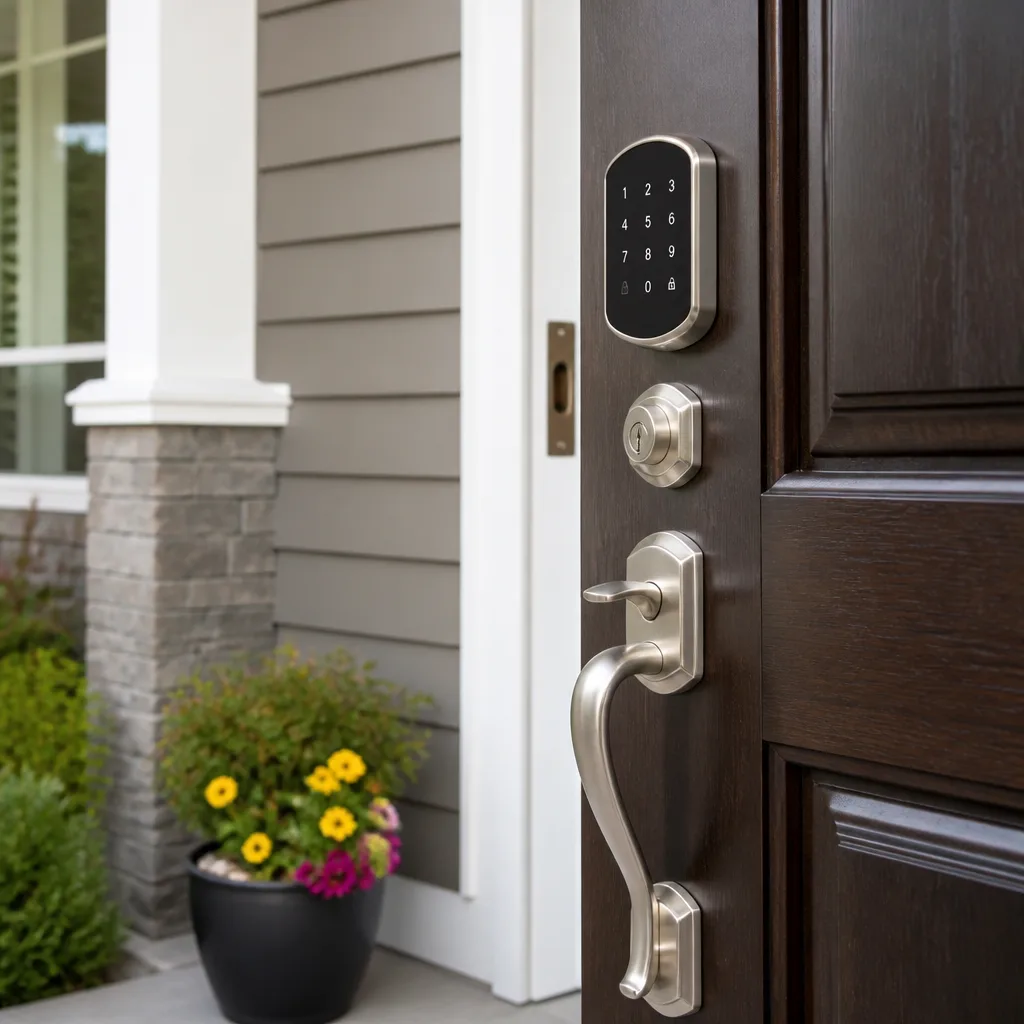 Smart locks
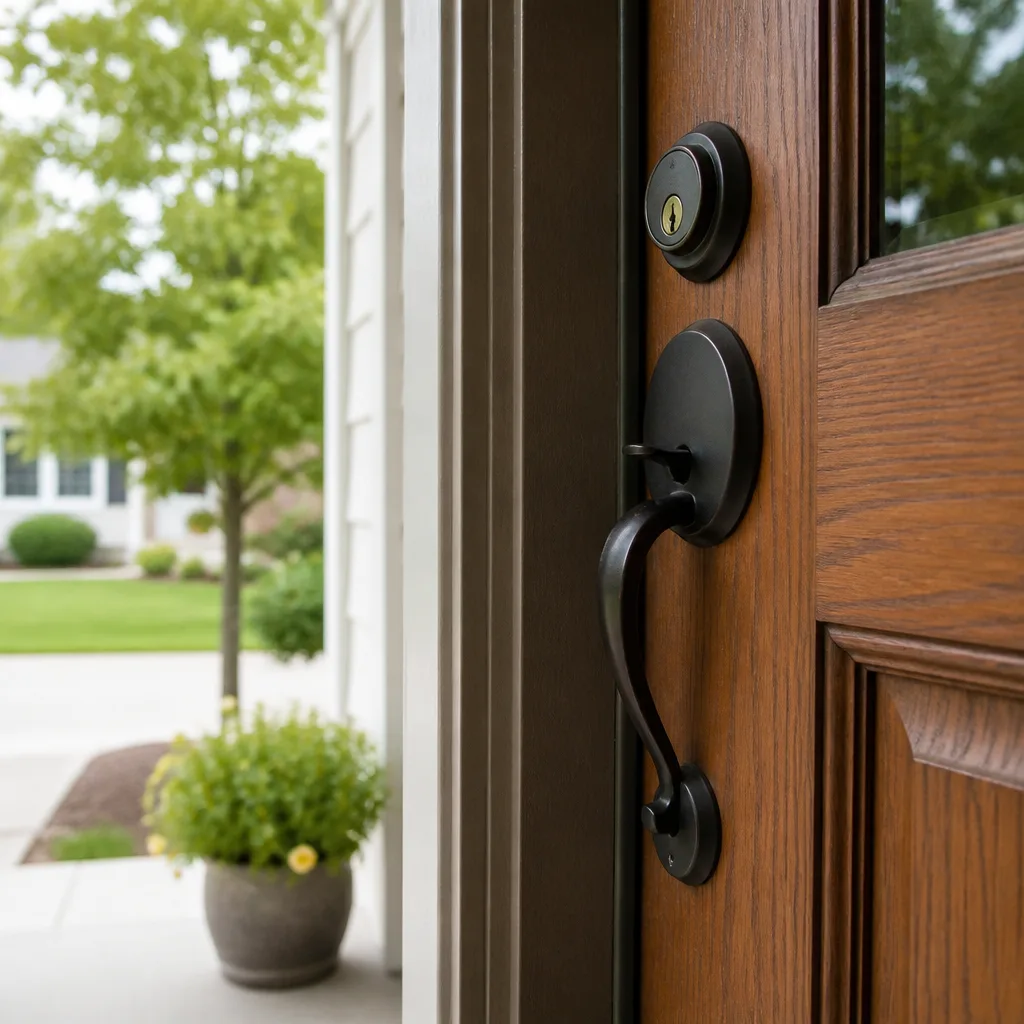 House lockouts
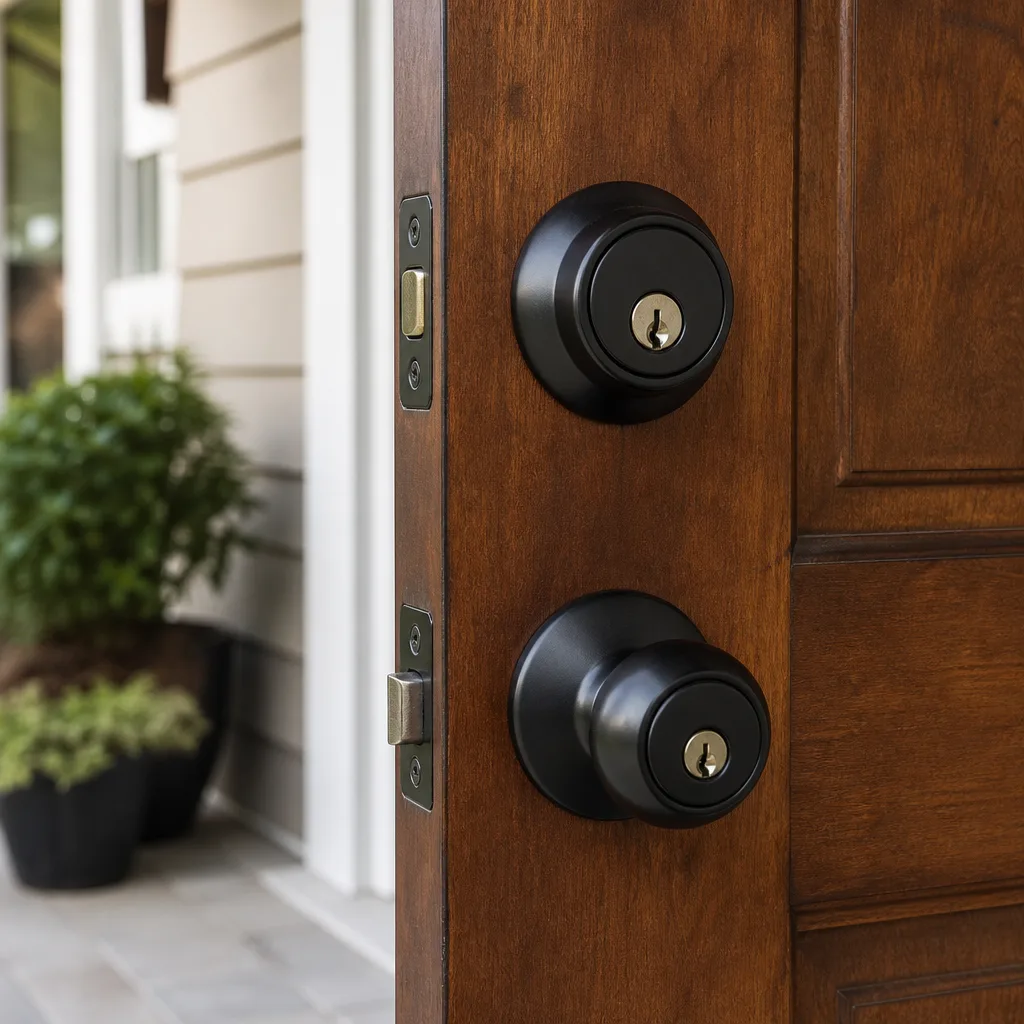 Re-keying
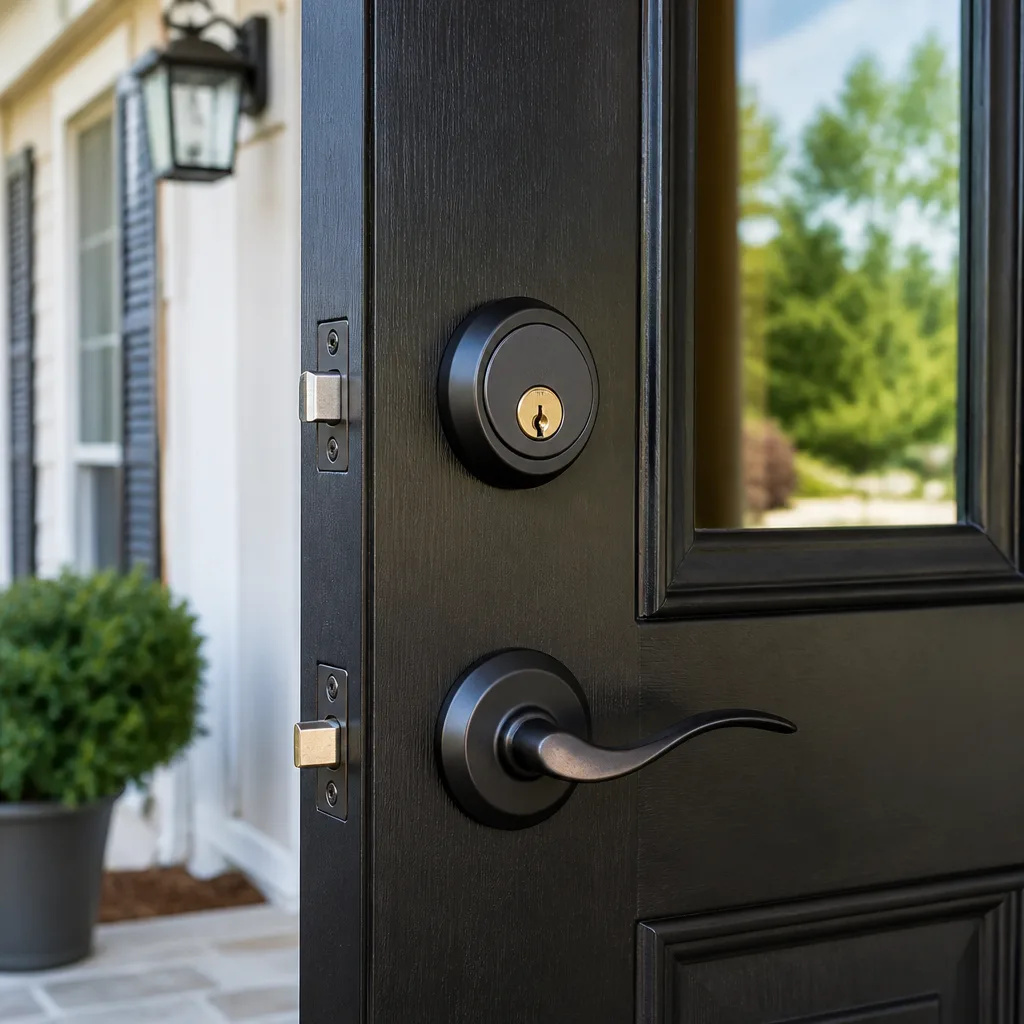 Deadbolt upgrades
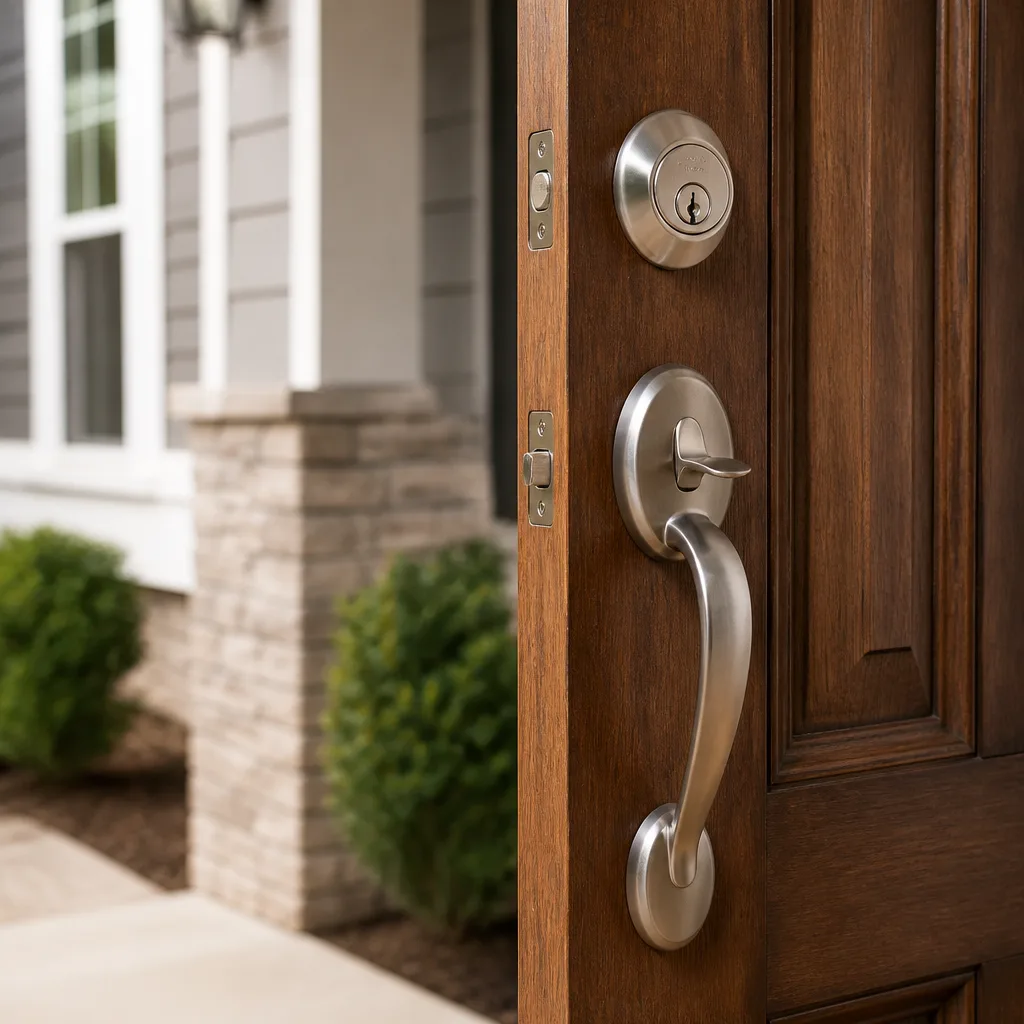 Schlage
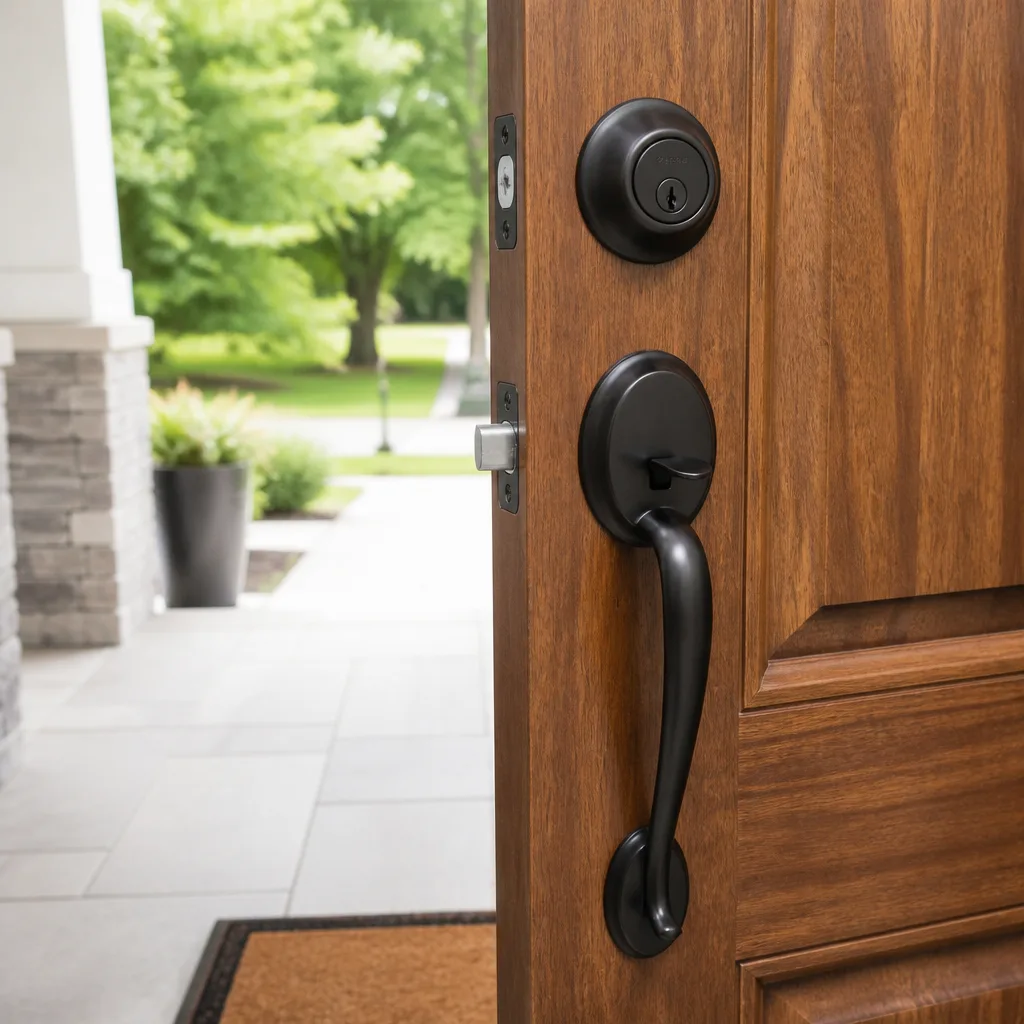 Kwikset
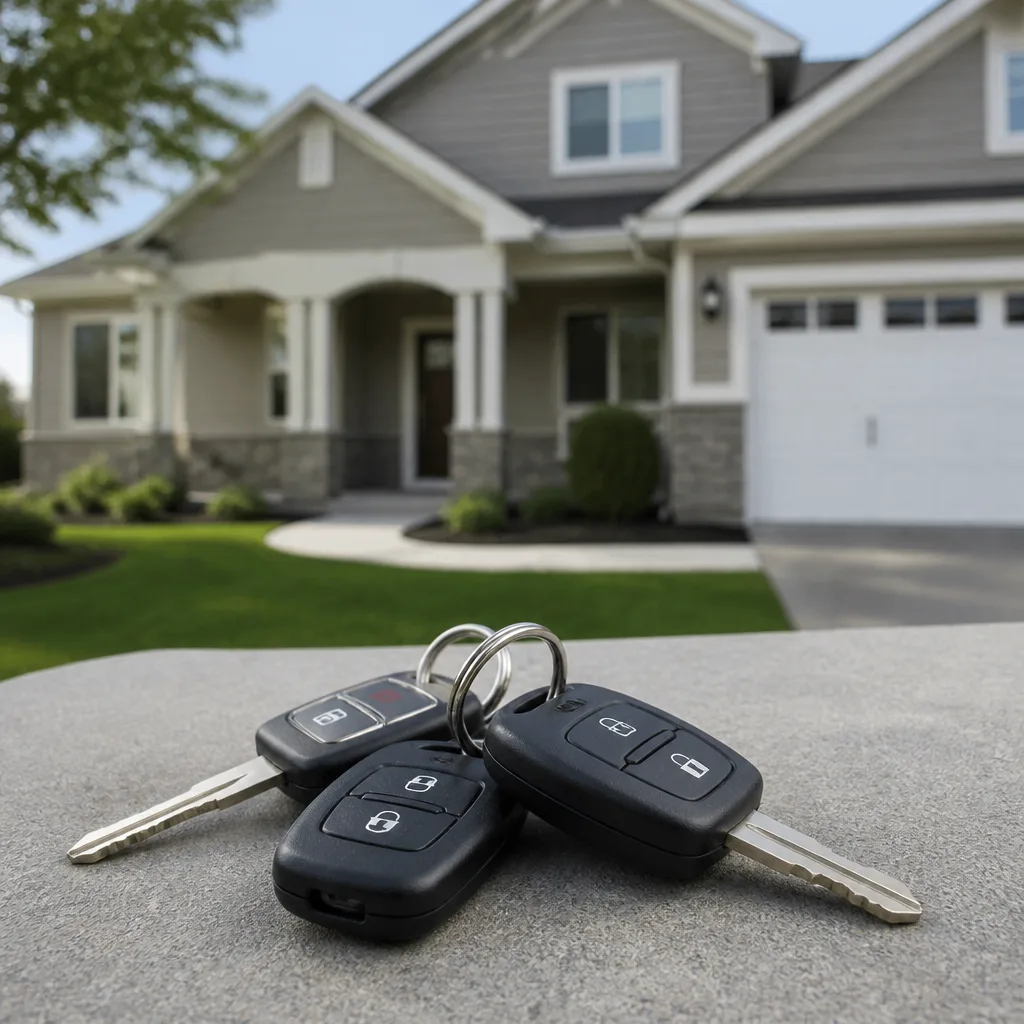 Car keys & fobs
Non-destructive entry first, always - and we re-key Schlage, Kwikset, and Baldwin locks on the spot while you watch
You get a price before we start. It does not change when we arrive. No surprises.
Get your free estimateChoosing the Right Locksmith Brand: A Buyer’s Guide for Riverside
A Kwikset SmartKey deadbolt, one of the most common locks on Riverside homes, can be bypassed in under 10 seconds with a technique called bumping and manipulation that requires no lockpicking skill. The packaging doesn’t disclose this. Most Riverside homeowners walk into a hardware store, compare price tags, and walk out with a lock that a determined intruder can defeat almost as fast as using a key. Our Complete Guide to Locksmith in Riverside is built to change that. You’ll learn how ANSI/BHMA grades translate to real resistance against forced entry, which brands earn their price difference, and what actually belongs on a front door versus a rental unit in Riverside.
Styles & brands we work with
Quick Answer
The right lock brand for a Riverside home depends on the entry point and the occupant. For most front doors, a Schlage or Baldwin deadbolt with an ANSI/BHMA Grade 1 rating is the sweet spot between cost and resistance to the forced-entry methods common in Inland Empire burglaries. High-security brands like Medeco and Mul-T-Lock earn their higher price when key control matters: rental properties, HOA common areas, and any door where you can’t account for every copy of a key ever made. The brand matters less than the grade, but grade is meaningless if the brand uses cheap internal components that fail in Riverside’s summer heat.
Table of Contents
- What ANSI/BHMA Grades Actually Mean for a Riverside Door
- Brand Comparison for the Riverside Market: Kwikset, Schlage, and the High-Security Tier
- Smart Lock Brands: Z-Wave, Bluetooth, and Wi-Fi in Riverside’s Heat
- Why Restricted Keyways Matter for Riverside Landlords and HOAs
- The Brand-and-Grade Combination We Recommend for Each Entry Type
- Rekeying vs. Replacing: When the Brand You Have Is Good Enough
- Common Mistakes to Avoid
- When to Call a Professional
- Frequently Asked Questions
- The Bottom Line
What ANSI/BHMA Grades Actually Mean for a Riverside Door
The American National Standards Institute and Builders Hardware Manufacturers Association test locks the way a burglar would attack them. Grade 1, Grade 2, and Grade 3 are not marketing labels. They are thresholds for how many strikes, twists, impacts, and cycles a lock survives before failing. In practical terms, a Grade 1 deadbolt must withstand 10 strikes of a 100-pound weight and 250,000 open-and-close cycles. A Grade 3 deadbolt only has to survive 2 strikes and 100,000 cycles. That difference is the gap between a lock that stops a shoulder slam and one that gives way on the second hit.
Riverside residential burglaries follow patterns. In our experience across the Inland Empire, forced entry on residential doors is rarely subtle. It’s a shoulder, a boot, or a pry bar. The lock body cracks, the strike plate screws pull out of the jamb, or the bolt shears and the door swings inward. Price-point locks from big-box shelves are often Grade 3 and built from pot metal components that fail exactly this way. Grade 2 is better, but Grade 1 is what commercial buildings are required to carry in many cases, and there’s a reason.
Here’s the breakdown in plain terms:
- Grade 3 (Basic): Minimum standard for residential. Survives minimal force. Appropriate for interior doors or a guest room where security is not the main concern. Not recommended for any exterior door on a Riverside home.
- Grade 2 (Better): Mid-tier for residential and light commercial. Withstands moderate force and 150,000 cycles. Acceptable for a side door or garage entry if the home has a monitored alarm as a second layer.
- Grade 1 (Best): Commercial-grade resistance. Built for heavy traffic and determined attacks. What we recommend for every ground-floor exterior door in Riverside, especially front doors and back doors that face an alley or side yard.
One Riverside-specific note: the heat here matters. Temperatures over 100°F for consecutive weeks cause cheaper lock internals, springs, and tailpieces to expand and seize. A Grade 3 lock that works fine in coastal California can bind and fail in a Riverside August. Grade matters for longevity, not just attack resistance.
Brand Comparison for the Riverside Market: Kwikset, Schlage, and the High-Security Tier
Once you understand grades, brands become easier to evaluate. The question is no longer “which brand is best?” but “which brand builds a Grade 1 or Grade 2 lock with internals that last in Riverside’s climate and resist the attack methods actually used here?” A brand’s reputation for polish or name recognition doesn’t always track with what’s inside the housing.
Kwikset: Value, With a Known Caveat
Kwikset dominates the Riverside homebuilder market because it is affordable and widely stocked at Lowe’s, Home Depot, and local hardware stores. The SmartKey rekeying feature is genuinely convenient, allowing homeowners to change their own keys in minutes without a locksmith call. But the SmartKey mechanism introduces a weakness. The sidebar and wafer system that enables instant rekeying can be defeated in under 10 seconds through bumping and manipulation. This attack requires a blank key, a tension wrench, and a small screwdriver. No specialized skill. For a home on a busy Riverside street or a property that sits empty during work hours, a SmartKey deadbolt as the primary front door security is a real vulnerability. We work on Kwikset locks every week. We’d replace a SmartKey deadbolt on an exterior door before we’d install one.
Schlage: The Mid-Tier Workhorse
Schlage is the brand we recommend most often to Riverside homeowners who want solid security without spending on high-security cylinders. Their B-series deadbolts are widely available in Grade 2 and Grade 1 configurations. The internal components are machined brass and steel, not stamped pot metal, which matters in heat and under repeated stress. Schlage keyways are more durable than Kwikset keyways because the pins and springs are seated in a tighter tolerance with less slop. We rekey Schlage locks constantly and see consistent quality across product lines. For a front door, a Schlage Grade 1 deadbolt combined with a Grade 1 keyed entry knob is a setup that will outlast the door itself.
Medeco and Mul-T-Lock: The High-Security Tier
When key control matters, Medeco and Mul-T-Lock are the conversation. These brands build restricted keyway systems. That means the key blank is patented or controlled. A tenant, contractor, or ex-employee can’t walk into a Riverside hardware store and have a copy cut, because no one outside the registered dealer network can even order the blank. Medeco’s Biaxial and M3 lines add rotating pins that resist picking and bumping. Mul-T-Lock’s telescoping pin-in-pin design does the same with a different approach. Both earn their price when you need certainty about who has a key. We carry service equipment for Medeco, Mul-T-Lock, and Abloy because high-security hardware like this requires a locksmith who knows it cold, not one who guesses at an unfamiliar system.
Baldwin: The Premium Aesthetic That Doesn’t Sacrifice Security
Baldwin is the brand for Riverside homeowners who want a lock that looks like it belongs on a custom home. Solid brass forgings, premium finishes, and weight that you feel the first time you turn the knob. But Baldwin also builds to Grade 1 standards, using Schlage-compatible keyways in many modern lines. This means you get curb appeal without dropping to decorative-only security. If you’re replacing a Schlage and want an upgrade in feel and finish, Baldwin is the natural step without losing the internal quality.
Smart Lock Brands: Z-Wave, Bluetooth, and Wi-Fi in Riverside’s Heat
Smart locks add convenience and remote monitoring, but the connectivity protocol matters more than the brand logo. In Riverside, where summer temperatures bake a south-facing door and power events spike during Santa Ana winds, the wrong smart lock becomes a very expensive dumb lock. Here’s what each protocol actually means for reliability.
Z-Wave is a mesh network protocol that runs on its own low-frequency radio band, not on Wi-Fi. A Z-Wave smart lock connects to a hub, which connects to your home network. It draws minimal power, so batteries last months longer. It does not depend on your Wi-Fi router being up or your internet service holding. For Riverside’s frequent power interruptions during heat waves and wind events, a Z-Wave lock keeps working locally. The hub can run on battery backup, and the lock still opens with a code or key even if the whole network drops.
Bluetooth locks talk directly to your phone. They use less power than Wi-Fi but require you to be within range to control them remotely, unless you add a bridge. For a back door or garage entry where you mostly want keypad access and occasional phone control, Bluetooth is adequate. For a front door where you want to check status from downtown Riverside while at work, Bluetooth alone won’t do it without additional hardware.
Wi-Fi locks connect directly to your router. Remote access from anywhere is built in. But Wi-Fi radios are the most power-hungry option, so expect to change batteries every few months. And if your router goes down or your power is out, the smart features go dark. That doesn’t mean the lock fails, most have mechanical key or keypad backup, but you lose the remote capability exactly when you might want it. On a Riverside home, we recommend Z-Wave or a Wi-Fi lock with a reliable mechanical key override, and we steer people away from smart locks that rely solely on cloud connectivity with no physical fallback.
One more Riverside-specific point: door alignment. Smart locks with motorized deadbolts require the bolt to slide freely. If your door has shifted with the seasonal temperature and humidity changes, even slightly, the motor strains and can burn out. Have the door and strike plate aligned before the smart lock goes on. It’s the difference between a five-year lock and a one-year failure.
Why Restricted Keyways Matter for Riverside Landlords and HOAs
Here’s a scenario we see repeatedly in Riverside’s rental-heavy neighborhoods near UCR and the downtown corridor. A landlord installs a standard Kwikset or Schlage deadbolt on a rental unit. The tenant moves out. The landlord rekeys, or doesn’t. Six months later, there’s an unexplained entry, no signs of forced entry, and a tenant who swears they didn’t leave a key anywhere. The problem: a standard keyway means any hardware store can cut a copy, and no one tracks how many keys exist for that cylinder.
A restricted keyway solves this. With Medeco, Mul-T-Lock, or a registered Schlage restricted keyway, the key blank is not available at retail. Every copy is cut by the locksmith who manages the system, and the locksmith keeps a record of who can order keys. When a tenant leaves, you don’t guess whether there are floating copies. The system tells you.
This matters for Riverside HOAs as well. Community pools, fitness rooms, maintenance closets, and gate locks are accessed by boards, vendors, and residents. A standard keyway with a “do not duplicate” stamp is a suggestion, not a barrier. Any overhead-light kiosk or a sympathetic counter clerk can cut the key. A restricted keyway makes duplication impossible without the system owner’s authorization.
For landlords, there’s a secondary benefit: accountability. When you issue keys through a controlled system, you know exactly how many exist and to whom they were issued. If a key goes missing, rekeying is a known cost and a known scope. It’s a smarter way to run a rental property in Riverside, where tenant turnover is constant and sleep-well security means knowing who holds access.
The Brand-and-Grade Combination We Recommend for Each Entry Type
Every door on a Riverside home faces a different threat profile. A front door on a main street has more foot traffic and visibility, which deters some intruders but also means more opportunity for door-checking. A back door facing an alley is the most common forced-entry point because no one can see the attacker. A garage entry door gets forced with a pry bar. A rental unit needs a lock that survives tenant changes. Here’s what we’d put on each.
- Front door: Schlage Grade 1 deadbolt and keyed entry knob, or Baldwin Grade 1 if you want premium finishes. If the home has a monitored security system, a Grade 2 Schlage is a reasonable step down. Avoid Kwikset SmartKey as the primary. Add a heavy-duty strike plate with 3-inch screws into the jamb, because the strongest deadbolt is only as good as the frame it bites into.
- Back door: This is the door that actually gets kicked. Same recommendation as the front door, Schlage Grade 1, because back doors face alleys and side yards with no eyes on them. Do not use a Grade 3 here under any circumstances. In our experience, this is the door Riverside intruders test first.
- Garage entry door: If this door leads into the house, it’s an exterior door and should be treated like one. Grade 1 Schlage with a reinforced strike. If it’s the overhead garage door, the lock matters less than the opener, but the person-door into the garage is a frequent target because it’s hidden from the street.
- Rental unit: Medeco or Mul-T-Lock restricted keyway deadbolt. The key control eliminates copy risk across tenant turnover. If the property is a single-family rental with a predictable turnover cycle, a Schlage restricted keyway is a middle step. The point is not the brand name, it’s that the key blank can’t be duplicated at retail.
Here’s the same information in table form for quick reference:
| Entry Type | Recommended Brand | Grade | Reasoning |
|---|---|---|---|
| Front door | Schlage or Baldwin | Grade 1 | Visible target, must resist shoulder impact and bumping |
| Back door | Schlage | Grade 1 | Hidden from view, highest forced-entry risk on most Riverside homes |
| Garage entry | Schlage | Grade 1 | Concealed from street, frequent pry-bar attacks |
| Rental unit | Medeco or Mul-T-Lock | Grade 1 | Restricted keyway controls key copies across tenant turnover |
| Interior door (office, bedroom) | Kwikset or Schlage | Grade 3 | Privacy, not security; no exterior threat |
The other layer that gets overlooked: Rekey Locks in Riverside is often the smarter first step than a full lock replacement. If your existing Schlage deadbolt is Grade 1 and the cylinder is in good shape, rekeying it costs a fraction of new hardware and closes the access gap immediately. We’ll tell you which is right for your situation, honestly.
Rekeying vs. Replacing: When the Brand You Have Is Good Enough
There’s an assumption that new hardware means better security. The opposite is often true. A 15-year-old Schlage Grade 1 deadbolt that has been properly maintained is more secure than a brand-new Grade 3 lock off a Riverside store shelf. The metal is thicker, the tolerances were machined when manufacturing costs allowed for better quality, and it has a known history of surviving this door. Rekeying changes the key, not the lock. If the hardware is solid and the cylinder is undamaged, rekeying is almost always the better financial decision.
Here’s when rekeying is right:
- You just moved into a Riverside home and don’t know who has keys from the previous owner.
- You’ve separated from a roommate or tenant and need to cut off their access immediately.
- You lost a key and can’t be sure where it went.
- You have multiple locks on different keys and want them all matched to one.
Here’s when replacement is the right call:
- Your existing lock is Grade 3 and sits on an exterior door.
- The cylinder is worn, gritty, or binds in Riverside’s heat despite cleaning and lubrication.
- You want to move to a restricted keyway system for key control.
- The lock has visible damage or the bolt no longer throws fully into the strike plate.
Rekeying as a core part of Greystone Locksmith home service means we approach every lockout, every new-home move-in, and every security upgrade with this question first: does this hardware deserve to stay? If yes, we rekey it. If no, we recommend a replacement with a brand and grade matched to the door’s actual role.
Common Mistakes to Avoid
- Buying a lock by price alone. A $25 Kwikset deadbolt on a front door is cheaper on day one but more expensive when it fails. Every lock on an exterior Riverside door should be Grade 1 or Grade 2. The price difference is a one-time cost. The security difference is permanent.
- Installing a smart lock on a misaligned door. Motorized deadbolts work fine when the bolt glides. On a door that has shifted with Riverside’s seasonal temperature swings, the motor strains and dies prematurely. Align the door first.
- Ignoring the strike plate. The strongest deadbolt in the world is held by two half-inch screws in soft door jamb wood. A kick splits the jamb. Three-inch screws through a heavy-duty strike plate into the stud behind the jamb changes the equation entirely.
- Using Kwikset SmartKey on a front door without knowing the vulnerability. The convenience feature is real. The bumping vulnerability is also real. If you have SmartKey, replace the exterior deadbolt or add a secondary security layer like a reinforced strike and a monitored alarm.
- Thinking “Do Not Duplicate” means anything. Without a restricted keyway, that stamp is a request, not a control. If key control matters, the key blank itself has to be unavailable at retail.
- Skipping the rekey after moving in. New Riverside homeowners inherit every key the previous owner ever handed out: contractors, house sitters, ex-partners, neighbors. A rekey on day one costs less than the deductible on a break-in.
- Matching all locks to one key without checking grades. Convenience is nice, but not if it means a Grade 3 lock on your back door. Match the key, not the quality.
When to Call a Professional
Some lock work is a Saturday project. Some is not. Call a professional when the lock is on an exterior door and you’re not confident in the grade you’re holding. Call when you’ve lost a key and don’t know who has it. Call when a tenant moves out and you need to rekey before the next one moves in. Call when a smart lock won’t connect, a key breaks off in the cylinder, or a deadbolt grinds and sticks in the heat. And call when you’re locked out, because forcing the door costs more than the service call. If you’re in Riverside and need an honest assessment of what your doors actually need, Emergency Locksmith in Riverside service is available for the moments that can’t wait. Greystone Locksmith offers free estimates in Riverside, call (866) 497-9415.
Frequently Asked Questions
For most Riverside front doors, a Schlage or Baldwin deadbolt with a Grade 1 ANSI/BHMA rating is the best combination of attack resistance, durability in extreme heat, and replacement part availability. High-security alternatives like Medeco or Mul-T-Lock are worth the extra cost if you need restricted key control. For more guides & resources, explore our blog, or call (866) 497-9415 for a free assessment of your current front door hardware.
Yes, the SmartKey rekeying mechanism introduces a sidebar-and-wafer design that can be manipulated in seconds with a blank key and basic tools, a bypass method documented by security researchers. For an exterior door on a Riverside home, we don’t recommend SmartKey as the primary lock. Whether you need rekeying or replacement, call (866) 497-9415 and we’ll walk you through the options.
A quality Grade 1 deadbolt from Schlage or Baldwin typically runs $60 to $180 for the hardware, with professional installation adding labor. High-security Medeco or Mul-T-Lock systems run higher due to the restricted keyway and cylinder cost. The full price is quoted on the phone before anyone is dispatched, and it’s the price on the invoice. Call (866) 497-9415 for an exact quote, estimates are free.
In most cases, yes. If your existing lock is Grade 1 or Grade 2 and the cylinder is in working condition, rekeying changes the key pins so old keys stop working, while keeping the hardware you already trust. It’s usually 50-70% cheaper than full replacement. Rekey Locks in Riverside is a core service we offer because it’s often the smarter move. Call (866) 497-9415 for a quote.
If tenant turnover is constant and you can’t account for every key ever handed out, a restricted keyway from Medeco or Mul-T-Lock eliminates the retail duplication risk entirely. Riverside landlords near UCR and the downtown rental corridor deal with this constantly. Call (866) 497-9415 to discuss key control options for your property.
A Grade 1 lock must withstand 10 strikes of a 100-pound weight and 250,000 open-and-close cycles. A Grade 2 lock is tested to 5 strikes and 150,000 cycles. For any ground-floor exterior door on a Riverside home, Grade 1 is the recommendation because forced entry here is blunt and quick. Call (866) 497-9415 to have your existing locks graded on site.
The Bottom Line
The best lock for a Riverside home is not the one with the best marketing. It’s the lock with a Grade 1 rating, internals built from machined brass and steel, and a keyway that matches your key-control needs. Kwikset offers value but has a known vulnerability in the SmartKey line. Schlage is the workhorse for most exterior doors. Baldwin offers premium finishes without sacrificing internals. Medeco and Mul-T-Lock earn their price when key control matters, especially for rental properties. And if your current hardware is solid, rekeying is often the smartest security move per dollar. We work on the lock in front of us, not just the brands we prefer. Being equipped across the full spectrum, from Car Key Replacement in Riverside to high-security deadbolts, means the answer is based on your door, not our inventory.
Written by the team at Greystone Locksmith, serving Riverside since 2011.