Last updated October 30, 2026
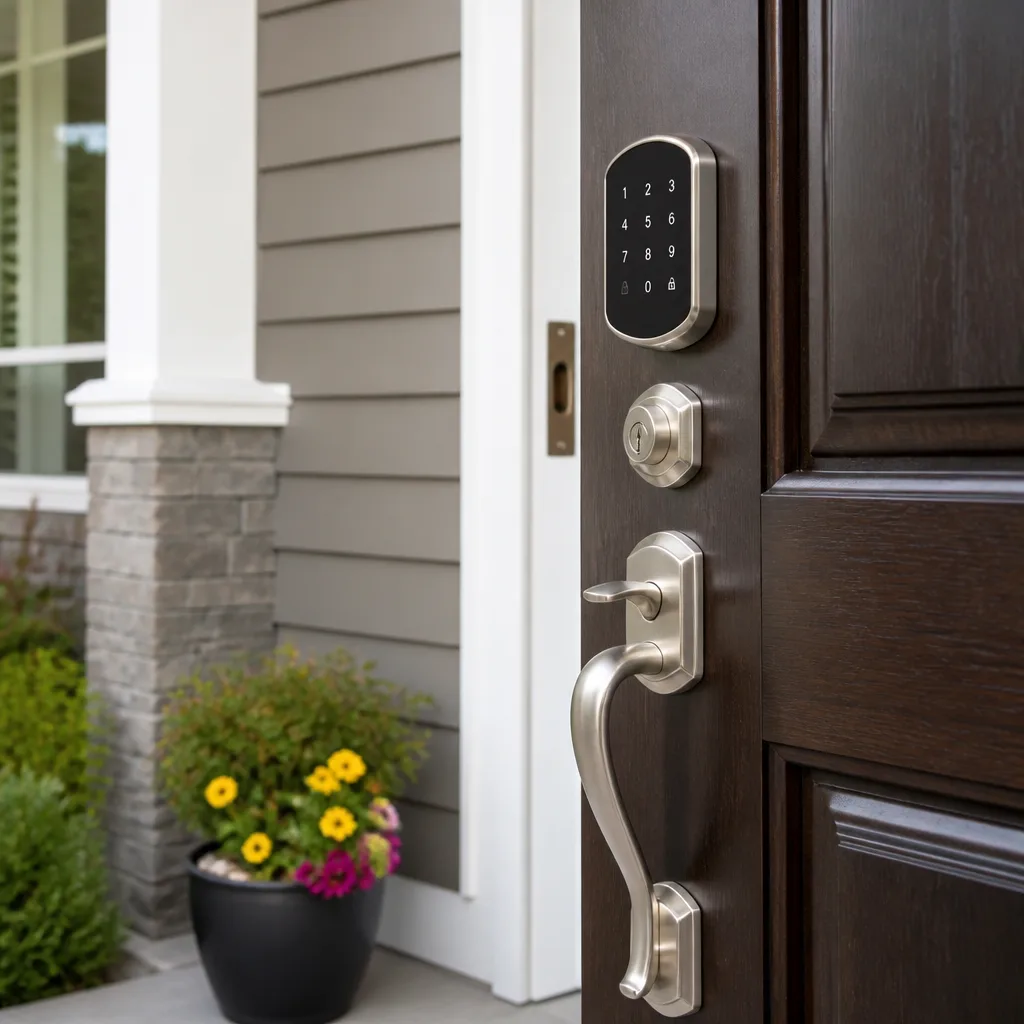 Smart locks
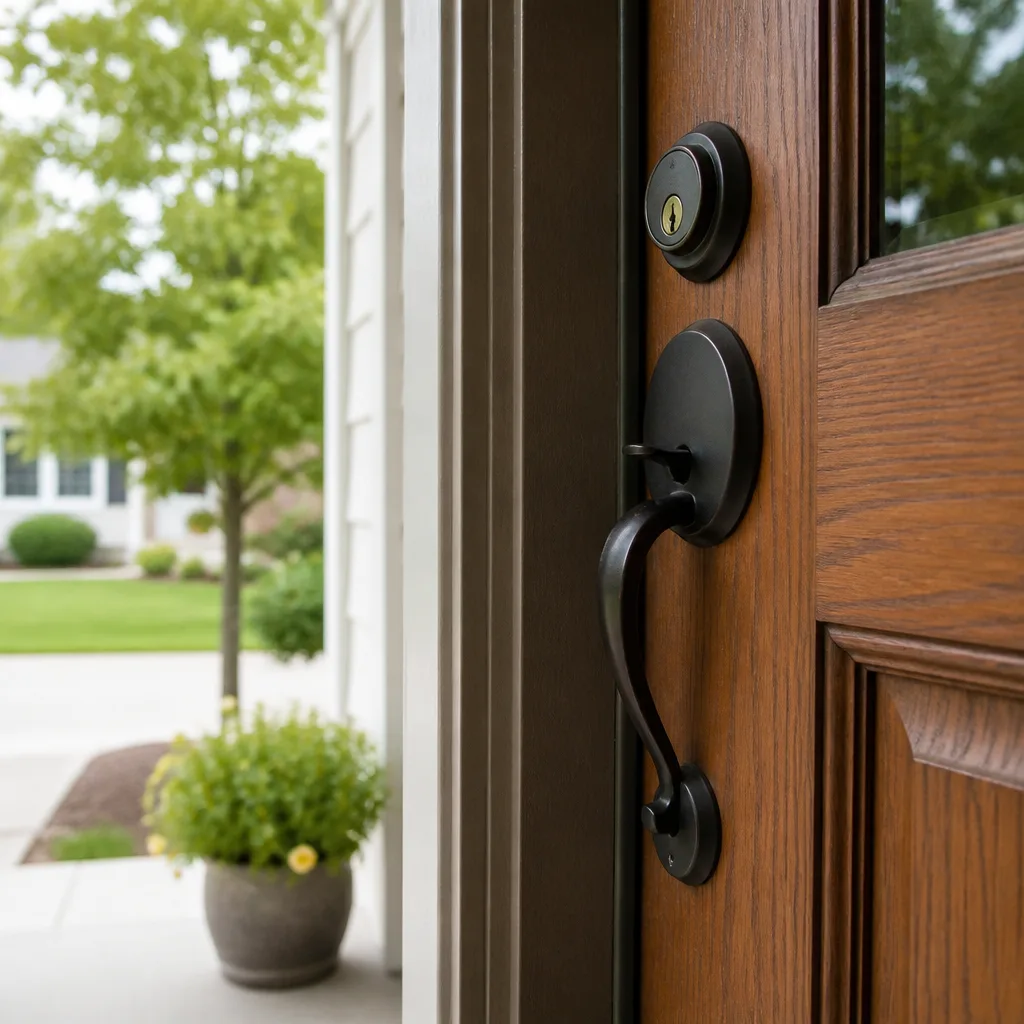 House lockouts
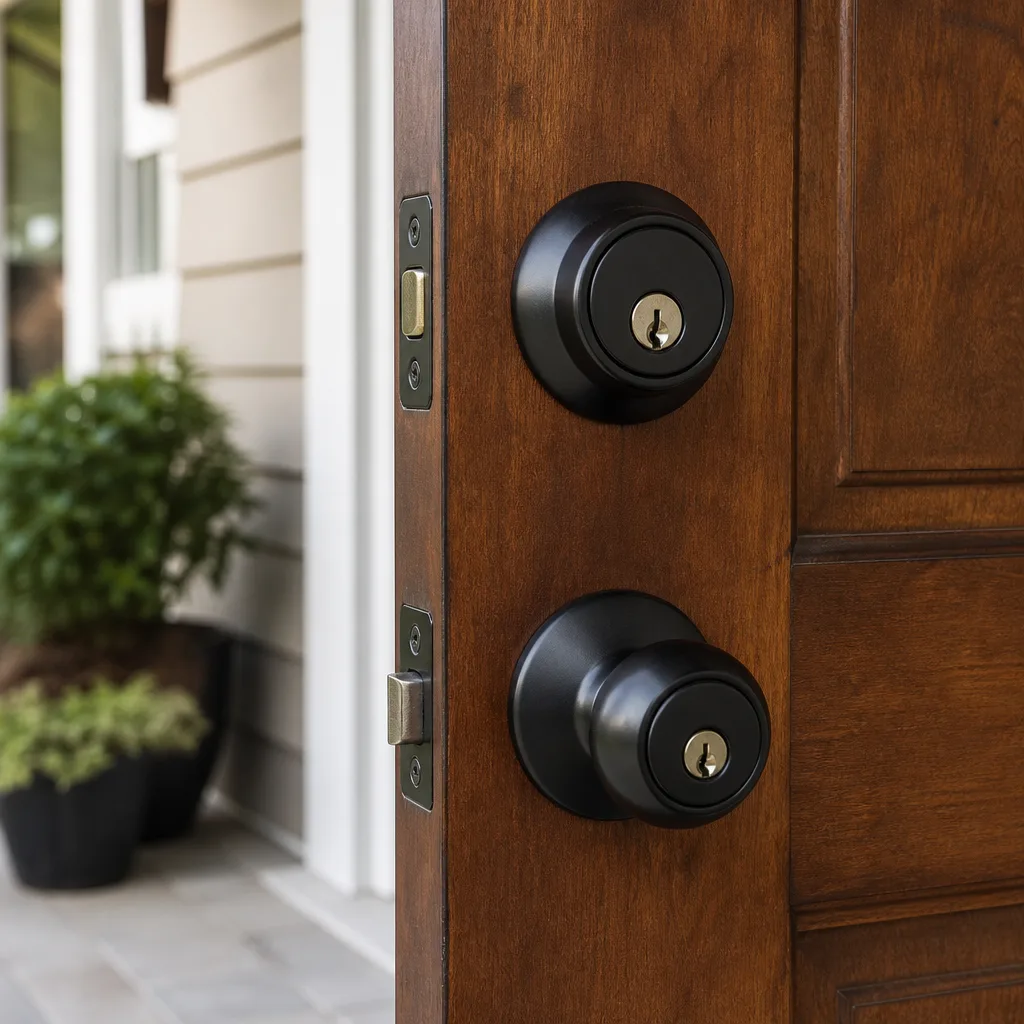 Re-keying
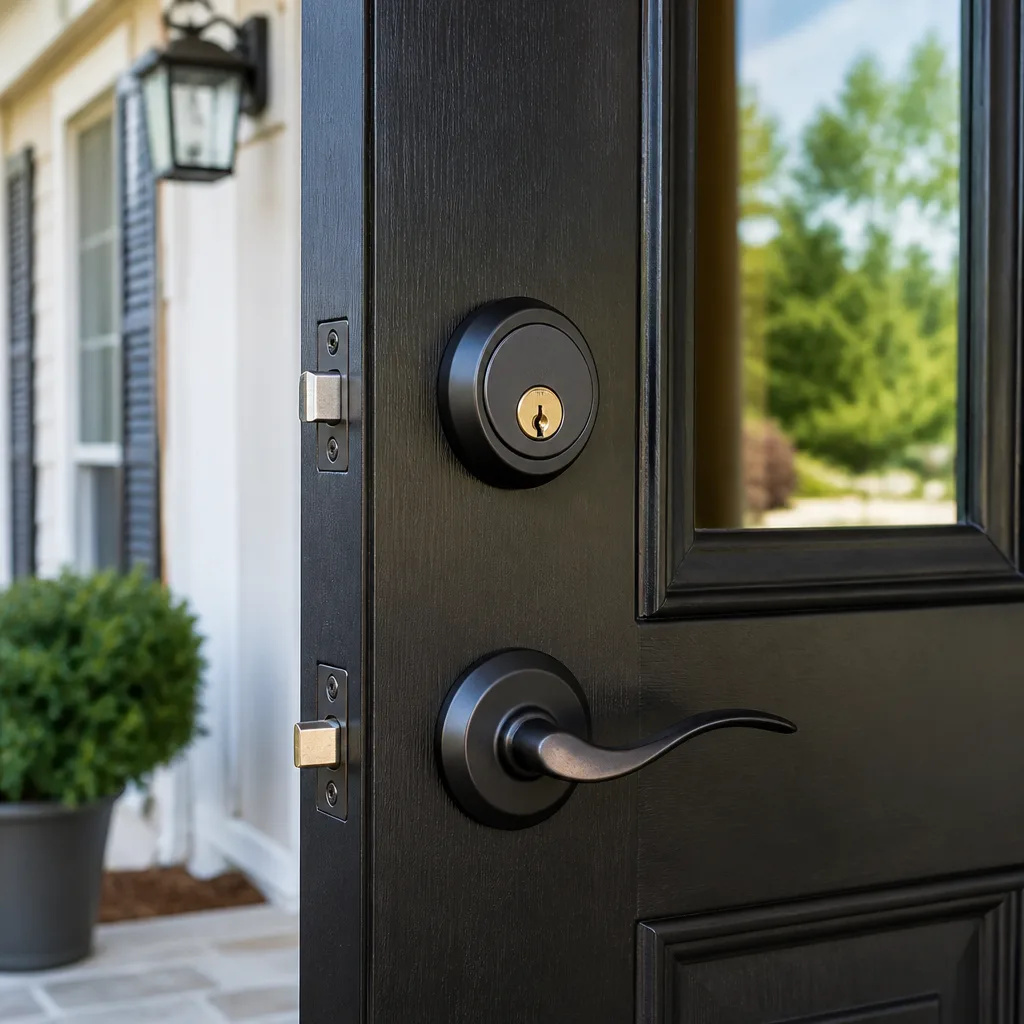 Deadbolt upgrades
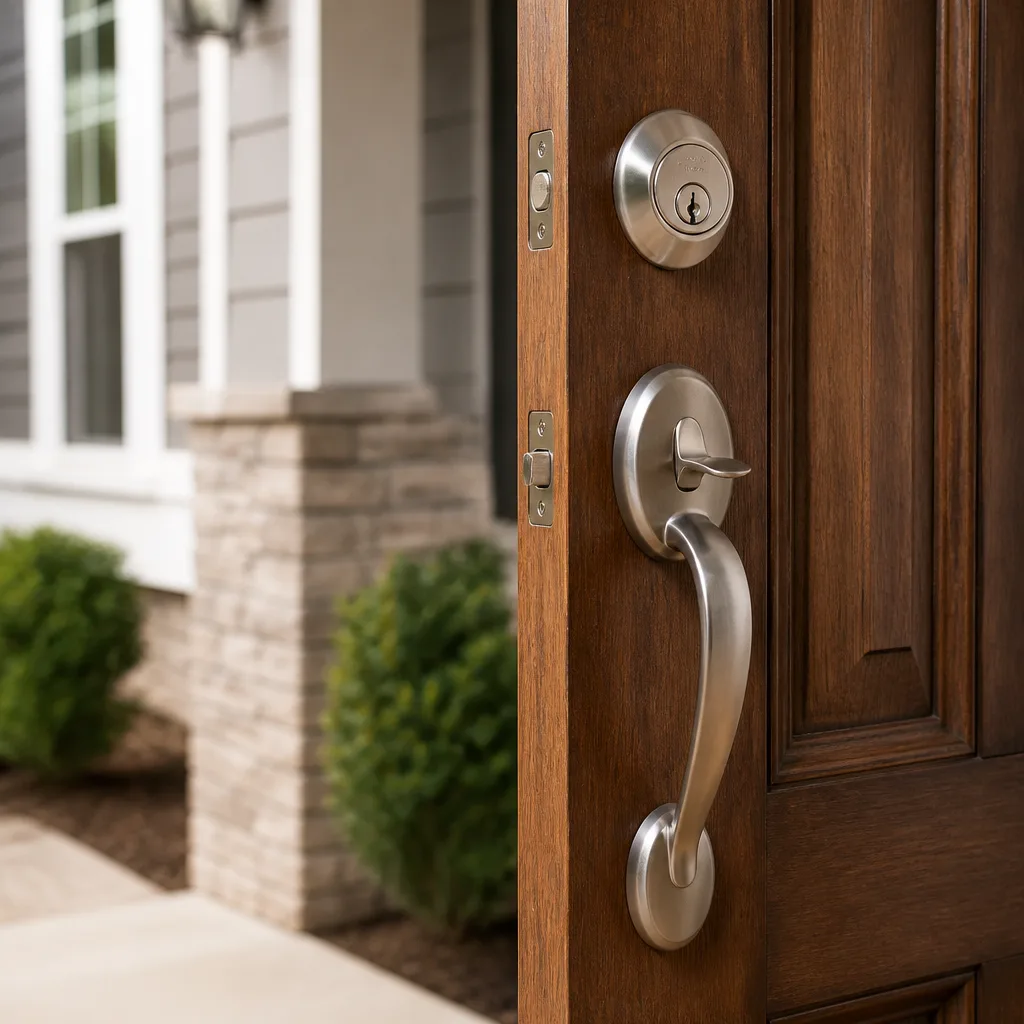 Schlage
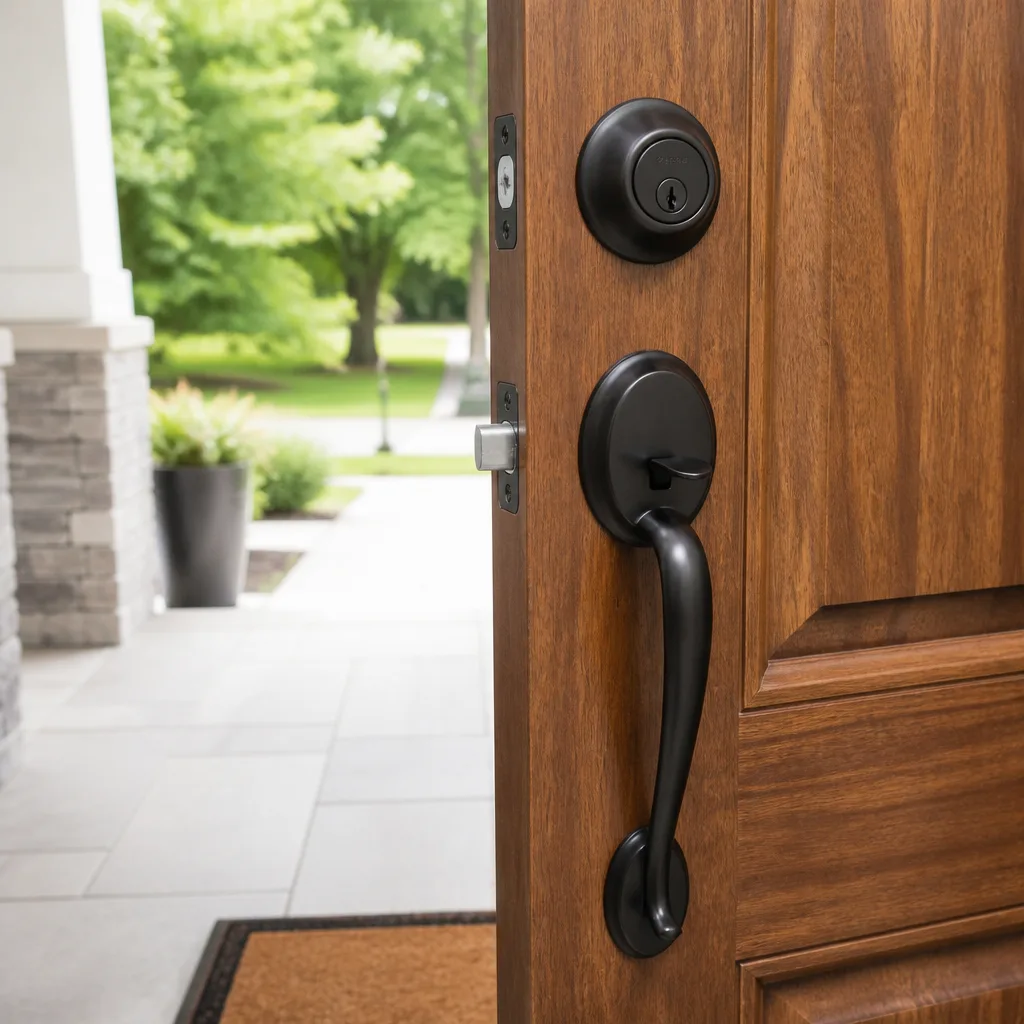 Kwikset
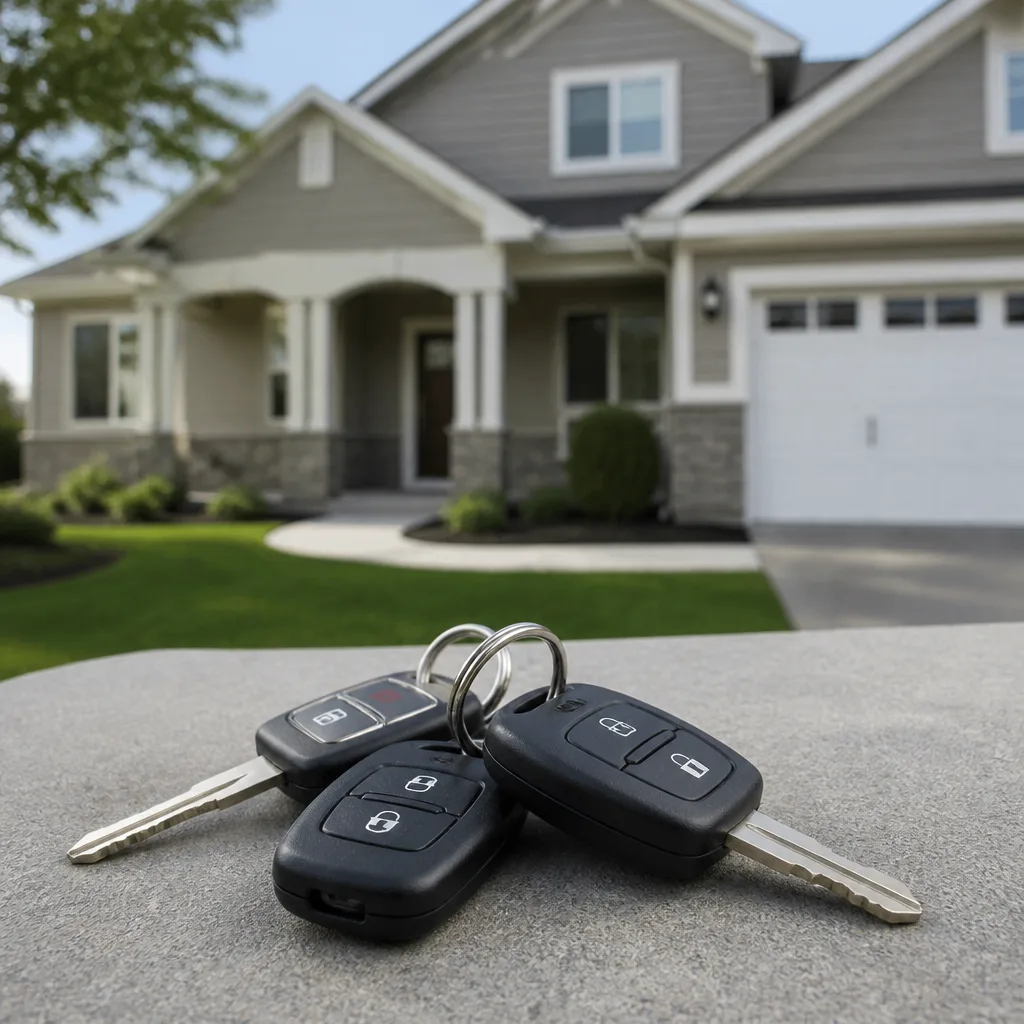 Car keys & fobs
Non-destructive entry first, always - and we re-key Schlage, Kwikset, and Baldwin locks on the spot while you watch
You get a price before we start. It does not change when we arrive. No surprises.
Get your free estimateLocksmith Warning Signs: A Riverside Homeowner’s Reference Guide
The most common locksmith scam in Riverside doesn’t start with a suspicious van rolling up your driveway. It starts with a legitimate-looking Google listing that uses a Riverside ZIP code but routes your call to a national call center three time zones away, where the person on the line has no idea what your actual door hardware looks like. That’s the uncomfortable reality in 2026, and it’s why a Riverside homeowner who knows what to look for at each stage of the transaction is effectively scam-proof. We wrote this guide to walk you through the four stages where warning signs actually appear: the search, the phone call, the arrival, and the invoice. For more guides & resources on protecting your home, visit our blog. If you know what a legitimate operation looks like at each step, you won’t need luck. You’ll need about ten minutes of focused reading.
Styles & brands we work with
Quick Answer
Locksmith scams in Riverside follow a predictable four-stage pattern: a Google listing that hides its real identity, a phone operator who refuses to quote a solid price, a technician in an unmarked vehicle with no verifiable credentials, and an invoice that triples the original estimate with surcharges invented on the spot. A legitimate locksmith asks about your lock, quotes a firm range or flat price over the phone, arrives in a marked vehicle, and hands you an invoice that matches the quote. Any deviation from that pattern, at any stage, is a signal to end the transaction and call someone else.
Table of Contents
- Stage 1: The Search – Warning Signs in Riverside Google Listings
- Stage 2: The Phone Call – What a Legitimate Locksmith Asks vs. What a Broker Asks
- Stage 3: The Arrival – The Vehicle, The Credential, and the Drill-Happy Tech
- Stage 4: The Invoice – Price Escalation Tactics and How to Refuse Them
- What to Do If You’ve Already Paid – California Consumer Complaint Pathways
- Common Mistakes to Avoid
- When to Call a Professional
- Frequently Asked Questions
- The Bottom Line
Stage 1: The Search – Warning Signs in Riverside Google Listings
Every locksmith search starts the same way: you type “locksmith near me” or “locksmith Riverside CA” and Google returns a map pack with three or four listings. Those listings are the first place a scam reveals itself, and the signs are more concrete than most people realize. You’re not looking for a vague sense that something’s off. You’re looking for three specific data points that almost always indicate a lead-generation front rather than a real Riverside locksmith.
Sign 1: No Street-Level Presence on Street View
Pull up the address listed on the business profile and drop it into Google Maps Street View. If the address pulls up a vacant storefront, a UPS Store mailbox, a residential home with no signage, or a building that clearly has nothing to do with locksmithing, you’re looking at a virtual listing. These operations rent Google Business Profile listings from address brokers in cities across the country, including Riverside. They’re not located there. They pay a small monthly fee to appear as if they are.
In Riverside, a city with distinct commercial corridors along Magnolia Avenue, University Avenue, and the area near the Galleria at Tyler, a locksmith that claims to operate here should have a traceable physical footprint. We’re not saying every legitimate locksmith has a storefront you can walk into. Many operate from marked service vehicles and a shop you won’t see from the street. But the address should resolve to something. A listing that maps to a P.O. box or a random apartment building is a lead broker.
Sign 2: Reviews with Identical Phrasing
Open the reviews and read the first ten. If you see the same phrase repeated across multiple five-star reviews, written by accounts with generic names and few other reviews in their history, the listing is likely padded with fabricated reviews. Look for phrases like “technician was very professional and got me in fast” or “great service, highly recommend” repeated with slightly different wording but the same structure. Real reviews from Riverside homeowners mention specific things: the deadbolt brand they had, the neighborhood they were locked out of, the time of night, the make and model of their car. If every review could apply to any locksmith in any city in America, none of them are real.
Sign 3: Business Age Under One Year
Google displays a “years in business” indicator on some profiles. If a Riverside locksmith listing has been active for less than twelve months and pairs that with dozens of five-star reviews, treat it with heavy skepticism. A genuine operation with that many satisfied customers doesn’t appear overnight. What actually happens is that scam networks burn through listings: a listing racks up complaints, Google flags it, the network closes it, and a new one pops up under a different name at the same address. The cycle repeats. An established local business has a history you can trace.
Our own operation at Greystone Locksmith home has served Riverside since 2011. That’s not a marketing line. It’s a verification point you can check. Longevity matters precisely because it’s expensive to fake.
Stage 2: The Phone Call – What a Legitimate Locksmith Asks vs. What a Broker Asks
Once you’re on the phone, the second stage of the transaction reveals more about the operation you’re dealing with than any other step. The difference between a real locksmith and a call-center broker comes down to the questions they ask and the price they’re willing to commit to before hanging up. Riverside homeowners should treat this phone call as a diagnostic tool.
What a Legitimate Locksmith Asks
A real locksmith needs to know what they’re walking into, because they’re the ones who will actually do the work. Expect questions like these:
- What’s the exact address, including cross streets? They’re calculating actual driving time and service area, not just punching a ZIP code into a routing app.
- What brand is the lock? Someone who works in the field will ask whether it’s a Schlage, a Kwikset, or something else, because a Kwikset deadbolt and a Medeco high-security cylinder require different tools and different skill levels.
- Are you locked out, or is the door open? This determines whether the job is a non-destructive entry or a simple rekey, and it changes the quote.
- Is this a car, a home, or a business? Automotive locksmithing is a different discipline from residential. A listing that claims to do both without asking which one you need is likely a dispatcher reading a script.
- What year is the car, if it’s a vehicle? A 2018 Honda Accord key is a chip-key programming job. A 1998 Toyota Corolla is a mechanical cut. The price difference is real, and a real locksmith knows to ask.
What a Broker Asks
A broker, by contrast, asks almost nothing about the job itself. The person on the other end of the line is a dispatcher who gets paid to route your call to whatever subcontracted technician happens to be available, anywhere in the Inland Empire. Their questions are transactional: name, phone number, address, and “when do you need someone out?” The only question about the lock itself is usually some version of “what kind of door is it?” which is designed to make the call sound legitimate while giving them no actual information they’ll use.
The tell is the pricing conversation. Ask a broker for a firm price and they’ll say some version of this:
“We can’t give you a final price over the phone. The technician will assess it on site.”
This is a scripted phrase. It is designed to get a technician to your door with zero pricing commitment, at which point the technician “discovers” a problem that requires drilling, a specialized tool, or a “high-security” fee. A legitimate locksmith will quote you a range or a flat price before dispatch. We quote a firm price on the phone for every job we can reasonably describe, and that price is the number on your invoice. If the lock situation genuinely requires an on-site look because something unusual is going on, we’ll say that before dispatch and explain what would change the number, not after the technician is already in your driveway.
Stage 3: The Arrival – The Vehicle, The Credential, and the Drill-Happy Tech
If a technician shows up on site, you’ve already navigated two stages without walking away. Stage three is where the physical evidence appears, and it’s the stage where a Riverside homeowner has the most power to stop a bad transaction, because the technician is standing right there and you can simply refuse service if things don’t line up. Here’s what to check.
Warning Sign: The Unmarked Vehicle
A legitimate locksmith operation sends a vehicle with the company name on it. Not because signage makes the job go faster, but because a locksmith who works in this trade every day treats the vehicle as a rolling workshop and a rolling advertisement. It’s marked. The technician who pulls up in a plain white van with no identifying marks, or worse, a rental car, is almost certainly a subcontractor working under a national broker’s booking. They may be perfectly competent with a lock. They’re also being paid a percentage of whatever they can upsell you, because the broker took their cut first. The pricing pressure comes down on you.
Warning Sign: No Verifiable Credential
In California, locksmiths who work for a company must be registered with the Bureau of Security and Investigative Services (BSIS), a division of the California Department of Consumer Affairs. A registered locksmith carries a BSIS pocket card. Ask to see it. If the technician cannot produce a BSIS pocket card, or produces something that looks like a homemade laminated badge with no state seal, do not let them touch your lock. A real locksmith will show you the card without hesitation. We’re used to this question, and we encourage it. It means the customer is doing their due diligence, which is exactly what you should do.
Warning Sign: The Immediate Drill Recommendation
This is the big one. A technician arrives, looks at your lock for thirty seconds, and announces that the only way in is to drill the cylinder. That’s the moment to end the transaction. Drilling is a last resort for a lock that has physically failed, an ultra-high-security cylinder that resists standard picking, or a severe weather-related seizure. In the vast majority of Riverside lockout situations, where the lock is a standard Schlage or Kwikset deadbolt on a residential door, the lock can be picked non-destructively in under ten minutes by a skilled technician. For advice on keeping your locks in good shape year-round, see our Seasonal Locksmith Care for Riverside: Year-Round Homeowner’s Guide.
The drill recommendation is usually about the invoice, not the lock. Drilling lets the technician charge you for the drill job, then charge you again for a replacement cylinder, then charge you for the labor to install it. A $150 lockout becomes a $500 invoice. Drilling may also be the fastest way for an underqualified tech to get in, because picking takes skill and drilling takes a power tool. If the technician recommends drilling without first attempting a non-destructive entry and explaining why it won’t work, you’re watching an upsell tactic. You are allowed to say no. You are allowed to pay for the service call and send them away.
We work on the lock in front of us, not the brands we prefer. When a Schlage deadbolt on a Riverside home needs to be opened without damage, we open it without damage. If it truly does need to be drilled, we’ll explain, specifically, why, before the drill comes out. You’ll know the reason. It won’t be a mystery.
Stage 4: The Invoice – Price Escalation Tactics and How to Refuse Them
By the time the invoice arrives, the job is done and the door is open. That’s when the worst of the scam industry makes its move, because the pressure to pay is now tied to the fact that you’re standing in your own living room with an open door and a technician who expects money before leaving. Riverside homeowners should know the specific line items that get added at this stage and how to push back on every one of them.
The Classic Surcharge Inventory
Here are the most common add-ons that were never quoted on the phone, in the order we most often hear about them from Riverside customers who call us after a bad experience with another operation:
- Emergency dispatch fee. Quoted over the phone as “there’s no extra charge for coming out,” then added to the invoice as a $75 to $150 line item for the privilege of dispatching a technician after 5 p.m. Riverside homeowners locked out at 9 p.m. on a Tuesday are the most frequent targets.
- High-security surcharge. “Your lock has a high-security cylinder, that’s an extra $80.” Most residential locks are not high-security. The technician may claim any lock they don’t immediately recognize is “high-security” to justify the fee. Ask them to name the brand and model. If they can’t, the fee is invented.
- Specialized equipment fee. “We had to use a special tool to get this open, that’s an extra $60.” Every lock requires specialized tools. That’s what a locksmith’s toolkit is. This fee is like a plumber charging extra for using a wrench.
- Labor minimum increase. The phone quote was $85. The invoice says $185 for labor because “the job took longer than expected.” A legitimate locksmith factors typical job time into the phone quote. If the labor number changes on site, you’re being positioned to negotiate from a weaker stance.
- Parts markup on a “replacement” cylinder that wasn’t needed. The technician drilled the lock, then sold you a replacement cylinder at three times retail. This is why stage three’s drill warning sign matters so much. The drill sets up the parts sale.
How to Refuse a Surcharge
You have more power here than the technician wants you to believe. The California Bureau of Security and Investigative Services requires locksmith companies to provide a written estimate before work begins, and the final charge cannot exceed that estimate without your approval. If the invoice includes fees that were not quoted on the phone and not disclosed in a written estimate before work started, you have grounds to dispute every one of those line items. Say this, calmly: “That fee was not part of the quote I received, and I’m not authorizing it now.” Document the invoice with your phone camera. Get the technician’s name and BSIS registration number. Refuse the surcharge specifically. If they insist, pay by credit card (never debit, never cash) and dispute the charge with your card issuer while filing a formal complaint with BSIS.
And remember: the full price should always be quoted on the phone before anyone is dispatched, and that price should be the price on the invoice. No call-out surcharge added on arrival. That’s the standard we hold ourselves to at Greystone Locksmith, and it’s the standard you should demand from anyone you let near your door.
What to Do If You’ve Already Paid – California Consumer Complaint Pathways
If you’ve already handed over money to a locksmith operation that used these tactics, you haven’t lost the fight. California has concrete pathways for recovering funds and holding bad actors accountable. Riverside homeowners should use every one of the following channels, in order.
- Document everything. Write down every detail while it’s fresh: the name on the Google listing, the phone number you called, the address the technician gave you, the vehicle description, the technician’s name if you have it, and a photo of the invoice. This documentation is the foundation of every complaint you’ll file.
- Contact the Bureau of Security and Investigative Services (BSIS). File a complaint online through the BSIS complaint portal. The bureau investigates unlicensed activity and unprofessional conduct by registered locksmiths. If the technician wasn’t registered, BSIS takes that very seriously. If they were, the complaint goes on their permanent record.
- File with the California Attorney General’s Office. The AG’s Public Inquiry Unit accepts consumer complaints against fraudulent businesses. A high volume of complaints about the same operation triggers investigation. If fifty Riverside homeowners file about the same lead broker, the pattern becomes visible to state enforcement.
- Dispute the charge with your card issuer. If you paid by credit card, you have protections under the Fair Credit Billing Act. File the dispute as soon as possible, attaching the documentation you gathered in step one. If you paid by debit card, your protections are weaker but still present. If you paid cash, recovery is harder, which is why you should never pay cash to a locksmith you haven’t verified.
- Report the listing to Google. Use the “Report a problem” function on the Google Business Profile of the locksmith in question. Google acts on fraudulent listings when enough reports accumulate. This is the long-term fix that keeps the same scam from claiming its next Riverside victim.
If you’re in a lockout or rekey situation right now and need a locksmith you can verify before you commit, we’re here. You can ask us anything: the BSIS registration check, the phone quote, the marked vehicle. We answer all of them. That’s the standard anyone serving Riverside should meet.
Common Mistakes to Avoid
Most homeowners who get taken by a locksmith scam in Riverside didn’t do anything wrong. They were in a hurry, already stressed by the lockout, and the operation they called was specifically engineered to exploit those exact conditions. But there are specific mistakes that multiply the risk, and they’re worth naming.
- Clicking the first paid ad without checking the listing underneath it. Sponsored results in Riverside locksmith searches are frequently lead brokers. Scroll past them and check the organic results and the map pack for operations with verifiable local footprints.
- Accepting “we’ll assess on site” as a pricing answer. This is the single most reliable predictor of an inflated invoice. If they won’t commit to a number from a description of the job, the number will be bigger when you’re standing at the door.
- Not asking for the BSIS pocket card. A legitimate technician has it. A broker’s sub won’t. This one question eliminates a large percentage of bad actors on the spot.
- Paying in cash. Cash leaves no paper trail, no dispute path, and no recovery option. Always pay by credit card for any locksmith service, even if it’s slightly less convenient.
- Letting the technician drill without a clear explanation. Drilling might be necessary in rare cases, but it should never be the default. If the explanation feels vague or rushed, stop the work and call someone else. You’re allowed to do that.
- Choosing based solely on the lowest phone quote. A suspiciously low quote in Riverside, like $35 for a lockout, is often the entry price of a bait-and-switch. The technician arrives, the lock somehow “can’t be picked,” and suddenly you’re paying for a drill job and a new cylinder anyway. If a phone quote is dramatically lower than everyone else’s, the gap will be made up somewhere else on the invoice.
When to Call a Professional
When a lock issue crosses from a do-it-yourself nuisance into a security risk, it’s time to call someone with the credentials and the toolkit to handle it. The signs are usually pretty clear. If you’ve been locked out and can’t find spare keys, call. If you’ve just bought a home in a Riverside neighborhood like Canyon Crest or the Wood Streets area and you have no idea how many existing keys are floating around from the previous owner, a rekey is the smart move, and it’s almost always cheaper than replacing all the hardware. If you’ve had a car key snap in the ignition or a fob die on a 2020 or newer vehicle, that’s a job for an automotive locksmith, not a dealership service department with a two-week wait. If you’re upgrading to high-security hardware like Medeco, Mul-T-Lock, or Abloy on a business property, you need someone who works with those systems regularly, not a budget-first operation that’s never seen one before. And if you’ve spotted any of the warning signs in this guide from an operation you’re considering, trust that instinct. Call someone with a verifiable track record instead. Emergency Locksmith in Riverside service is available when time matters. Greystone Locksmith offers free estimates in Riverside. Call (866) 497-9415 with any lock situation, from a residential lockout to a commercial access question.
Frequently Asked Questions
Check the Google Business Profile for a street-level address that resolves on Street View, read reviews looking for Riverside-specific details rather than generic praise, and check how long the listing has been active. Then call and ask the hard questions: firm price on the phone, BSIS registration number, and the names of the lock brands they work with. A real operation answers all of these. A broker stalls on all of them. For lockout situations where urgency is high, we recommend calling (866) 497-9415 and asking us these exact questions. We’ll pass.
Yes, for any job that can be accurately described on the phone, which includes the vast majority of residential lockouts, rekeys, and car key replacements. The technician should quote a flat price or a narrow range, and that number should hold unless something genuinely unexpected changes the scope. The full price is quoted on the phone before anyone is dispatched, and it is the price on the invoice. This is the standard at Greystone Locksmith. If a locksmith refuses to commit to a number, they’re likely planning to inflate it on site.
Look for identical phrasing across multiple reviews, review accounts with no profile photo and no review history beyond the locksmith in question, and reviews that read like marketing copy (“very professional and fast service”) without mentioning any specific detail about the job, the neighborhood, the time of day, or the hardware involved. In Riverside, genuine reviews tend to mention things like the Galleria area, the 91 freeway, or a specific lock brand. If every review could apply to any locksmith in any American city, they’re likely fabricated or purchased.
California law requires a written estimate before work begins and prohibits charging more than that estimate without your authorization. There is no legal line item called a “high-security surcharge,” a “specialized equipment fee,” or an “emergency dispatch fee” if those items weren’t in the written estimate. These are invented fees. A legitimate invoice lists labor and parts at the agreed-upon rates, matching the phone quote. If you see an unrecognized line item, challenge it. You are not obligated to pay an unauthorized surcharge.
Response time varies by location and time of day, but an emergency locksmith operation built for urgent situations typically runs response times measured in minutes rather than hours when local technicians are available. Ask for a specific ETA when you call, not a vague “on the way.” A real operation can give you a window. Greystone Locksmith’s emergency service is built around Riverside response readiness. Call (866) 497-9415 for a current ETA.
Only if your property uses high-security hardware from one of those brands, which is more common in Riverside commercial properties and security-conscious residential upgrades than in standard single-family homes. For a typical Schlage or Kwikset deadbolt, any competent residential locksmith will do. But if you have a Medeco cylinder on a commercial door or a Mul-T-Lock deadbolt on a custom home, you need a technician who works with those systems regularly, because high-security cylinders require specialized tools and training. We carry that expertise, but we’ll also tell you honestly if a standard residential lock is better served by a simpler, more affordable service call. Rekeying is often the smarter move. We’ll tell you which is right for your situation.
The Bottom Line
The Riverside locksmith scam doesn’t ambush you from a dark alley. It shows up in a polished Google listing, on a smooth phone call, and at your front door with a power drill. Your best protection is a checklist that runs through every stage of the transaction: a search result that has a real Riverside address, a phone operator who asks real questions about your lock and commits to a firm price, a technician in a marked vehicle with a BSIS pocket card who tries non-destructive entry first, and an invoice that matches the phone quote line for line. Miss one of those signals, and you might still be fine. Miss two, and you’re likely being set up. The rule is simple: if anything feels wrong at any stage, you’re allowed to stop. Call someone verified instead. Rekey Locks in Riverside from a team that answers the hard questions. Call Greystone Locksmith at (866) 497-9415. Free estimates, honest answers, and a technician who will show you the BSIS card before the first tool comes out.
Written by the team at Greystone Locksmith, serving Riverside since 2011.